Use this HARO to published backlink workflow to qualify queries, approve expert pitches and verify live links. Track real outcomes, not promises.
Instead of manually chasing journalist requests, replies and missing links across your inbox, build a HARO to published backlink workflow that assigns each query an expert, records the approved response and checks the published attribution. Use the process below to turn relevant requests into accountable outreach—not a promise that every pitch earns a backlink.
- Use this HARO to published backlink workflow to track journalist outreach from qualification to verified attribution.
- Linkible offers HARO link building for brands seeking agency support; publishers retain control over coverage and links.
- Approve expert commentary before submission, and distinguish an unlinked mention from a published backlink.
- Record the live article, destination URL and link attributes before counting a placement.
Why this matters
A journalist can use your commentary without linking to your website. An accepted pitch is not a published article, and a published article is not automatically a backlink.
Linkible is best for brands seeking agency support for HARO link building rather than managing outreach entirely in-house. The service still depends on editorial decisions: no agency controls whether a journalist selects a source or includes a link. Review Linkible’s services against the qualification, approval and reporting requirements below.
For your 2026 outreach plan, separate activity from outcomes. Submitted responses show work completed; verified links show what was published. Combining them hides where the process needs attention.
Before you start
- Access and ownership: Have access to the journalist request, its permitted reply channel, a working business inbox and a shared tracker. Assign 1 owner to each request so colleagues do not submit competing responses.
- Expert materials: Prepare an approved biography, accurate job title, relevant credentials, first-hand experience and a suitable website destination. Financial, legal or other sensitive commentary needs the appropriate internal review before submission.
- The publication gotcha: Read the source eligibility, deadline, time zone, attribution terms and submission instructions before drafting. Website links are editorial choices; providing a URL does not secure its inclusion.
Treat HARO as the request source named in this guide, not as a reason to assume a particular interface or submission method. Follow the current request’s instructions. The tracker labels below are fields you create, not claims about platform buttons or settings.
Query intake and qualification
The first configuration unit prevents irrelevant requests from entering production. A request belongs in your pipeline only when your expert can answer the actual question with attributable knowledge.
- Create the record. Add these tracker fields: Request, Publication, Journalist, Deadline, Time zone, Expert, Owner, Target URL and Status. Copy the request accurately and preserve the original message for reference.
- Check eligibility. Match the requested role, geography, experience and subject expertise. A SaaS founder is not automatically qualified to answer every software question; an ecommerce operator should not claim experience with a sales channel they have never used.
- Assess relevance. Read the publication’s relevant coverage and the request’s intended subject. Prioritise a genuine connection to your buyers over a publisher metric alone.
- Set the decision. Use Qualified, Declined or Needs clarification in Status. Record a short reason for rejected requests so the same unsuitable opportunity does not keep resurfacing.
Expected result: Every qualified request has an eligible expert, an accountable owner and an unambiguous deadline. No response is drafted simply because a publication looks attractive.
For 2026 campaigns spanning US, UK and Canadian teams, store the original deadline and its time zone together. Do not rely on a copied calendar time without checking the conversion.
Expert response and approval
A useful response supplies publishable expertise, not a disguised service pitch. The journalist needs an answer that fits the assignment and can be attributed accurately.
- Extract the questions. Create an Answer requirements field containing the requested questions, format, length limit and required credentials. Keep mandatory conditions separate from optional background.
- Collect the substance. Ask the expert for a direct answer, a practical explanation and a relevant example they can substantiate. Do not invent customer outcomes, revenue figures or personal experience to strengthen the response.
- Draft for quotation. Put the answer first. Remove promotional claims, unnecessary company history and links that do not help establish the source or support the statement. Follow the journalist’s word limit rather than a generic pitch template.
- Approve the response. Add Approved response, Approved biography, Approver and Approval date. Have the named expert confirm both the commentary and the attribution before submission.
Expected result: You have an approved answer that addresses the request, supports its factual claims and identifies the real source. The submission owner does not need to improvise expertise at the deadline.
Use this final editorial check:
- Does the opening sentence answer the question?
- Can the expert defend every attributed statement?
- Does the response add something beyond a definition?
- Are any confidential details, unsupported figures or unnecessary promotions still present?
Approve the substance before polishing the pitch. Clear writing cannot rescue an answer from an unqualified source.
Submission and follow-up controls
Submission needs a record, not another disconnected email thread. Keep the exact response and the request instructions together so anyone taking over can see what happened.
- Submit as instructed. Use the specified channel, subject format and requested attachments. Include the approved attribution and website destination only where appropriate. Never bypass an explicit instruction against attachments or follow-ups.
- Save the evidence. Add Submitted response, Submitted at, Submission channel and Thread reference. Change Status to Submitted only after the response has actually been sent.
- Assign the next action. Record Next action, Action owner and Review date. If the journalist gives a publication date or requests more information, use that instruction to determine the next action.
- Control follow-ups. Check the original request before sending another message. Follow up to provide requested material, correct a substantive error or make a relevant enquiry—not to pressure the journalist for a guaranteed link.
Expected result: Each submission has an audit trail and a clear next action. Colleagues can distinguish a response awaiting editorial consideration from a task that needs immediate attention.
Do not treat silence as permission to repeat the pitch. When follow-ups are prohibited, respect the instruction and keep publication monitoring separate from journalist contact.
Publication verification and reporting
Count a backlink only after checking the live article. A journalist’s acceptance, a draft preview and a brand mention are different outcomes.
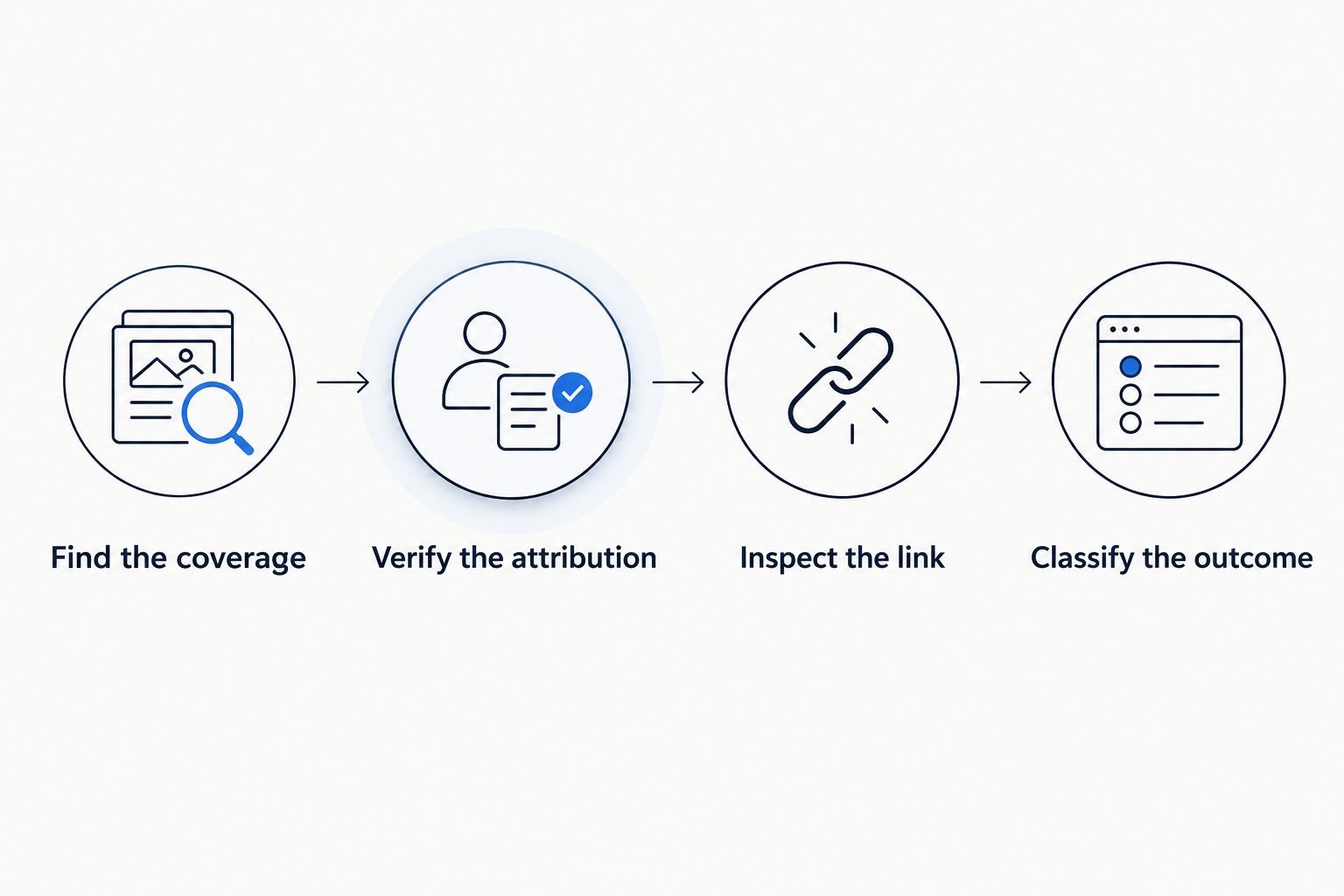
- Find the coverage. Check the journalist’s message, the publication’s relevant coverage and searches for a distinctive phrase from the approved response. Search results help discovery, but the live page is the evidence.
- Verify the attribution. Confirm the expert’s name, role and quotation. Record Live article, Publication date and Attribution status. Request a correction if a material error misrepresents the source.
- Inspect the link. Confirm that the hyperlink reaches the intended website destination. Record Linked URL, Anchor text and Link attributes; inspect the hyperlink or page source rather than assuming its attributes from appearance.
- Classify the outcome. Use Published backlink, Published mention, Published without attribution or Not published as separate outcomes. Keep unresolved submissions open until your reporting process closes them.
Expected result: Your report distinguishes verified backlinks from coverage without links. Each recorded placement includes enough evidence for another person to check it.
For a 2026 report, retain the date of your verification alongside the publication date. A live article can change after publication, so the record should show when its link status was checked.
Keep 2 checks distinct: whether the attribution is accurate and whether the hyperlink works. Passing either check does not establish the other.
Recheck coverage whenever an article changes
A second workflow starts with existing coverage rather than a new query. Use it when a journalist sends an update, your monitoring identifies a change or a scheduled review finds that the article has moved.
| Workflow | Best for | Advantage | Limitation |
|---|---|---|---|
| Query-led outreach | Experts answering a relevant journalist request | Connects the response to an active editorial need | Selection and linking remain editorial decisions |
| Coverage recheck | Brands with previously published commentary | Detects changed attribution, destinations or link status | Cannot require a publisher to restore or add a link |
Create Last checked, Previous outcome and Current outcome fields. Open the current article, repeat the attribution and hyperlink checks, then record what changed. Preserve the previous result rather than silently overwriting it.
If an accurate mention has no hyperlink, make a concise attribution request only when appropriate. Provide the relevant destination and explain its connection to the named source. Do not frame an optional editorial link as a debt.
Expected result: Existing coverage stays accountable without confusing link maintenance with new acquisition. Restoring a removed link is not the same outcome as earning a new placement.
Troubleshooting
The deadline passed before approval
Stop the submission unless the journalist explicitly invites a late response. Move expert eligibility and approval ownership into intake, and agree an internal review deadline before drafting begins. Record Missed deadline rather than counting an unsent response as outreach.
The expert was quoted without a backlink
Record Published mention, not Published backlink. Check whether the request discussed attribution, then consider a brief, relevant link request. Respect a refusal and retain the coverage record; editorial inclusion does not establish an obligation to link.
The hyperlink points to the wrong destination
Check the actual destination, including any redirect, before contacting the publisher. Send a factual correction identifying the current destination and the intended source page. Avoid turning a correction into a demand for keyword-rich anchor text.
Two team members contacted the journalist
Consolidate ownership immediately and stop parallel follow-ups. Preserve both submissions in the record, identify the approved version and clarify only if the discrepancy affects the journalist’s work. Require an owner before a request moves to Qualified.
The report calls every placement a followed link
Inspect the hyperlink’s attributes and correct the report. A link marked nofollow or sponsored needs accurate classification, not a more favourable label. Do not promise ranking effects from an attribute check or treat a followed link as proof of performance.
Customise your workflow
Start with a shared tracker if it gives your team clear ownership and reliable records. Move to a more structured system when handoffs, approvals or reporting become difficult to manage. Compare the operational requirements in this guide with the CRM tools for managing link-building outreach.
For SaaS, add Expertise area and distinguish product knowledge from broader industry experience. For ecommerce, add Trading experience so commentary about fulfilment, merchandising or retention comes from someone with relevant responsibility.
In your 2026 agency brief, require request relevance, named-source approval, submitted responses and live-placement evidence. Ask Linkible how HARO link building would fit your wider outreach programme, and confirm responsibilities before work starts. Agency support does not remove the need for access to your subject-matter experts.
FAQ
What is a HARO to published backlink workflow?
A HARO to published backlink workflow tracks a journalist request through qualification, expert approval, submission and live-link verification. It separates outreach activity, editorial coverage and confirmed backlinks so each outcome is reported accurately.
Does answering a HARO query guarantee a backlink?
No. The journalist decides whether to use the response, and the publisher controls whether the article includes a hyperlink. Record an unlinked quotation as coverage rather than a backlink.
What should I include in a journalist response?
Include a direct answer, relevant expertise and accurate attribution, following the request’s specific instructions. Use substantiated experience and supporting evidence rather than promotional claims or invented examples.
How long does it take to get a published backlink?
There is no fixed turnaround for an individual journalist request. The assignment deadline, editorial schedule and decision to publish sit outside your outreach tracker; record stated dates rather than inventing a publication forecast.
Should I ask a journalist to add a missing link?
Make a concise, relevant request when the circumstances and submission instructions support it. Explain the connection between the named source and the destination, then respect the publisher’s decision.
How do I verify whether a published link is followed?
Inspect the hyperlink’s attributes in the live page or its source. Record attributes such as nofollow or sponsored accurately, and keep that check separate from whether the destination works.
Can Linkible manage HARO link building for my brand?
Linkible offers HARO link building alongside outreach and digital PR services. Discuss expert access, approval responsibilities, target relevance and reporting requirements before agreeing the scope; publication and links remain editorial decisions.
One last thing
The most useful missing field is often the rejection reason. Record why a request failed qualification, why an expert declined or why a response missed its deadline. Those notes give your next 2026 campaign a practical filter: fewer unsuitable requests entering the workflow, without pretending that a higher submission count equals better links.
Related guides
- HARO link building for B2B SaaS companies
- HARO alternatives for digital PR
- Types of backlinks for ecommerce SEO
Bring your target pages, expert biographies and approval requirements to Linkible. Use the existing enquiry route to discuss a HARO link-building scope with clear ownership and placement reporting.
Discuss your HARO outreach workflow
Define expert access, target relevance, approvals and placement reporting before agreeing the scope.