Compare the best link prospecting tools in 2026. Ahrefs leads for backlink discovery; see where Semrush, BuzzStream and manual research fit your team.
Best overall: Ahrefs for backlink-led prospecting. Best for an existing SEO workflow: Semrush; best for manual discovery: Google Search. This 2026 guide compares the best link prospecting tools for finding relevant publishers, qualifying opportunities and preparing outreach.
- Ahrefs leads this best link prospecting tools shortlist for competitor backlink discovery.
- Semrush suits teams combining prospect research with their existing SEO workflow.
- BuzzStream manages outreach relationships; Hunter finds contact details rather than qualifying publishers.
- Linkible offers SaaS and ecommerce brands link building services when they want agency support rather than software alone.
Why this matters
A large prospect list is not a link building strategy. You need publishers that cover your subject, reach the right audience and have a credible reason to reference your page.
Software handles different parts of that job. A backlink database finds existing links; a contact finder identifies people; an outreach platform organises conversations. Buying the wrong category leaves the actual bottleneck untouched.
Linkible is the service option for SaaS and ecommerce brands that want link prospecting and outreach handled together. If execution is the gap, compare an agency brief with another software subscription through Linkible.
What makes the best link prospecting tools?
Use these criteria to evaluate your 2026 shortlist before comparing feature lists:
- Publisher relevance: Can you find websites and individual pages connected to your product, audience or subject?
- Discovery depth: Does the tool reveal competitor referring domains, relevant articles or other useful starting points?
- Qualification controls: Can you inspect the linking page, outbound links and editorial context before approving a prospect?
- Contact workflow: Can you identify an appropriate person and preserve the context behind the approach?
- Campaign organisation: Can your team track ownership, previous contact and the next action without duplicating work?
- Reviewable evidence: Can you retain enough information to explain why a publisher belongs in the campaign?
No authority score replaces these checks. A domain-level metric cannot tell you whether an editor has a reason to link to your specific resource.
Link prospecting tools at a glance: 2026 shortlist
| Tool | Best for | Standout capability | Key limitation |
|---|---|---|---|
| Ahrefs | Competitor backlink discovery | Analysing referring domains and competing backlink profiles | Existing links do not establish editorial suitability |
| Semrush | Prospecting within an SEO workflow | Backlink research alongside broader SEO analysis | Overlapping capabilities need not justify another subscription |
| Google Search | Topic-first manual discovery | Finding published pages through queries and search operators | Qualification and campaign records remain manual |
| BuzzStream | Team outreach management | Organising prospects, relationships and outreach activity | Campaign organisation does not validate publisher quality |
| Hunter | Contact discovery | Finding and verifying professional email addresses | Contact information is not evidence of link relevance |
| Screaming Frog SEO Spider | Website-level qualification | Crawling page elements and link structures | It does not discover a market-wide publisher list |
1. Ahrefs: best link prospecting tool for competitor research
Ahrefs lets you inspect backlinks, referring domains and the pages receiving links. Its Link Intersect functionality helps identify websites linking to competitors but not to your site.
Start with competitors that address the same buyer problem. A broad market leader often attracts links for reasons unrelated to your campaign, so copying its entire backlink profile creates unnecessary work.
Ahrefs pros:
- Discover referring domains through competitor backlink research.
- Inspect individual linking pages rather than relying on domain summaries.
- Identify shared referring domains across competing websites.
- Connect link opportunities with the content that attracted them.
Ahrefs cons:
- Competitor links include opportunities you cannot reproduce, such as partnerships or historical announcements.
- A discovered backlink still needs manual checks for relevance, editorial context and suitability.
Best for: SEO teams with clear organic competitors and a useful destination page already prepared.
Build a proposed seed set of 3 competitor domains, then inspect the actual linking pages. Record the reason each page links: a citation, a product mention, an example or a resource recommendation. That reason should shape your outreach angle.
Verdict: Buy Ahrefs when competitor backlink discovery is your main prospecting bottleneck.
2. Semrush: best link prospecting tool for integrated SEO work
Semrush combines backlink analysis with wider keyword and competitor research. Backlink Gap helps compare backlink profiles, while its link building features support prospect research and outreach workflows.
For a team already using Semrush, the first decision is whether its existing research capabilities cover the campaign. Evaluate the missing task before adding another platform.
Semrush pros:
- Connect backlink research with keyword and competitor analysis.
- Compare referring domains across competing websites.
- Keep prospect discovery close to existing SEO planning.
- Support link building research within a broader marketing workflow.
Semrush cons:
- A broad feature set requires clear ownership and a defined process.
- Database suggestions still need page-level editorial review.
Best for: In-house teams managing keyword research, competitor analysis and link building in the same platform.
Give the team a specific research question, such as finding publishers that reference competing category resources. Review the resulting opportunities against your target page rather than approving every domain appearing in a gap report.
Verdict: Buy Semrush when integrated SEO work matters more than adding a separate prospecting workflow.
3. Google Search: best link prospecting tool for topic-first discovery
Google Search finds published articles, resource pages and specialist publications through ordinary queries and search operators. Use quoted phrases, intitle: and site: to narrow research around a subject or publication.
Search is useful when competitor backlink lists produce repetitive opportunities. It lets you start with the editorial topic instead of an existing link graph.
Google Search pros:
- Find pages using the language your customers and publishers use.
- Explore specialist subjects without choosing competitors first.
- Refine queries around article formats and editorial themes.
Google Search cons:
- Search results do not provide a complete backlink profile.
- Qualification, contact research and record keeping require separate work.
Best for: Focused campaigns targeting a narrow subject, customer problem or specialist publication type.
For SaaS, research the workflow your product supports rather than only searching for software lists. For ecommerce, explore relevant buying questions, product care topics and specialist interests. The destination page must still contribute something useful to the publisher's article.
Avoid treating every page mentioning guest contributions as an endorsement. Review the publication's existing content and outbound links first.
Verdict: Buy into Google Search as a research method; skip it as a complete outreach system.
4. BuzzStream: best link prospecting tool for outreach teams
BuzzStream organises prospect records, contact information and outreach activity. Its role becomes clearer when several people need to work from the same campaign history.
Use it to preserve why a prospect was selected, who owns the relationship and what happened during outreach. A well-maintained record prevents research context disappearing between qualification and pitching.
BuzzStream pros:
- Centralise prospect and relationship records.
- Keep outreach activity connected to the relevant contact.
- Support shared campaign organisation across a team.
BuzzStream cons:
- Poorly qualified prospects remain poor prospects inside an organised database.
- The workflow needs consistent record keeping to stay useful.
Best for: Agencies and in-house teams coordinating outreach across multiple contributors.
Define qualification fields before importing a large list. Include the target article, relevance rationale, intended destination page and outreach owner. This makes handovers more useful than a spreadsheet containing only domains and email addresses.
Verdict: Buy BuzzStream when team coordination and relationship history are the constraint.
5. Hunter: best link prospecting tool for contact discovery
Hunter helps find professional email addresses associated with people and domains. Its verification tools support contact-data checks before outreach.
Use Hunter after approving a publisher, not as the starting point for deciding which websites deserve attention. Finding an address does not establish that the person handles editorial decisions.
Hunter pros:
- Find contact details associated with a selected domain.
- Research professional email addresses for named contacts.
- Add email verification to contact preparation.
Hunter cons:
- Email verification does not establish consent, editorial responsibility or interest.
- Contact discovery does not assess the publisher's relevance or link practices.
Best for: Teams with qualified publisher lists but incomplete contact records.
Check the publication's author pages and editorial information before choosing a recipient. A relevant editor or article author needs a different pitch from a general business contact. Record the reason you selected that person.
Verdict: Buy Hunter when contact discovery blocks an otherwise qualified campaign.
6. Screaming Frog SEO Spider: best for website-level qualification
Screaming Frog SEO Spider crawls websites and extracts page elements and link information. Use it to examine a shortlisted publication's structure or investigate relevant sections in more detail.
This is a qualification tool, not a replacement for a backlink database. It helps answer questions about a website you have already found.
Screaming Frog SEO Spider pros:
- Inspect page titles, headings and link structures across a website.
- Explore relevant sections beyond a publication's homepage.
- Export crawl information for structured review.
Screaming Frog SEO Spider cons:
- Crawling requires configuration and interpretation.
- Technical observations do not establish editorial credibility or audience fit.
Best for: Technical SEO teams investigating shortlisted publishers at page level.
Keep the crawl focused on the question you need answered. Finding a relevant content section is useful; collecting technical fields without an approval decision adds work.
Verdict: Hold Screaming Frog SEO Spider for deeper qualification rather than primary prospect discovery.
How the tools rank
This 2026 ranking prioritises relevant publisher discovery, inspectable evidence and a workable handover to outreach. The use-case order matters more than a universal score: backlink discovery comes first, followed by integrated research, manual discovery, campaign management, contacts and technical qualification.
Ahrefs takes the default recommendation because competitor backlink research provides both a publisher and the context of an existing citation. It does not establish that the same publisher should link to you.
No tool on this list replaces editorial judgement. Choose the capability that fixes your current constraint, not the longest feature list.
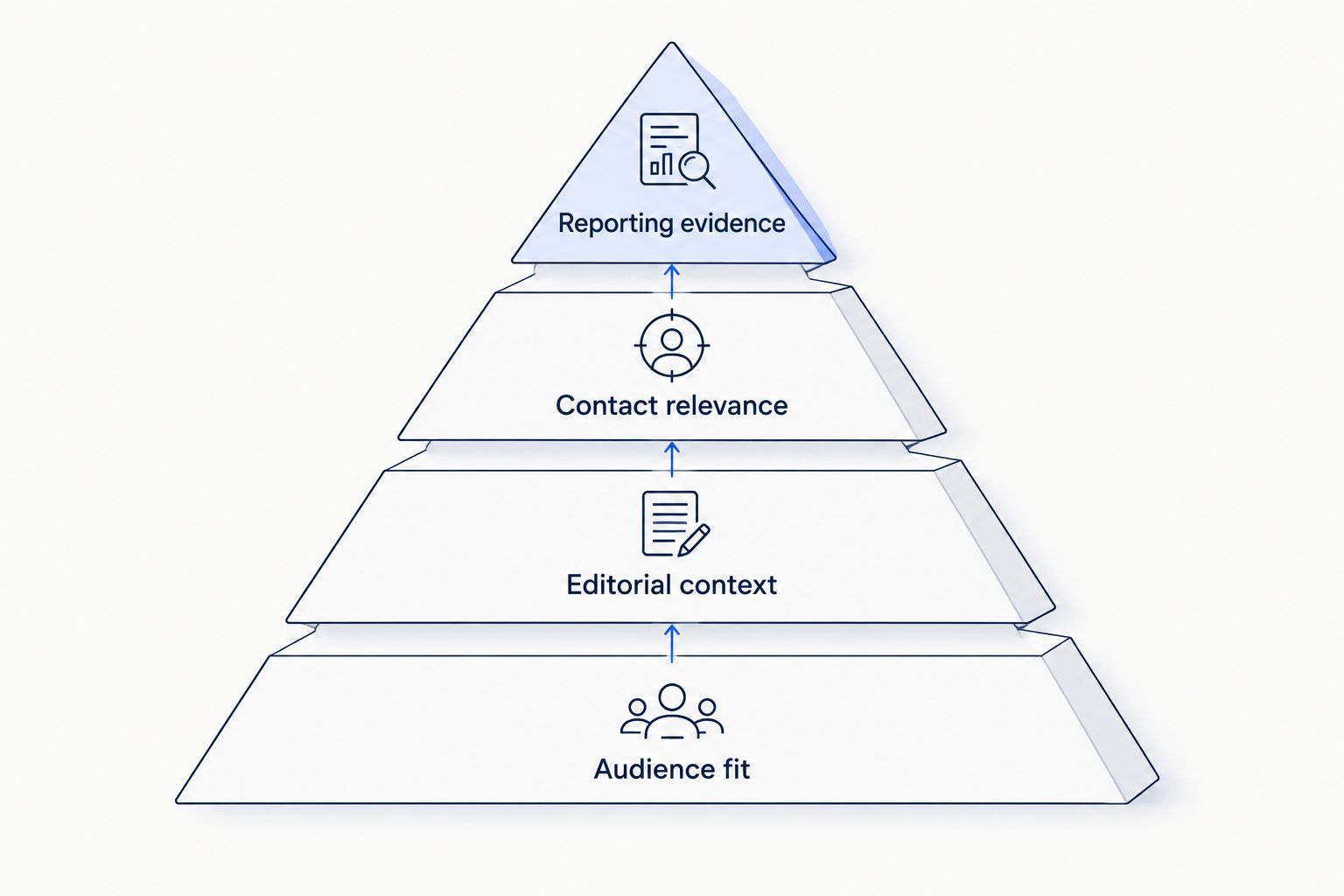
Qualify prospects before sending outreach
Use this approval checklist before a prospect enters a live campaign:
- Audience fit: The publication reaches people connected to your product or subject.
- Editorial context: A specific article or section gives your proposed contribution a credible home.
- Contact relevance: The recipient has a documented connection to the article or publication.
- Reporting evidence: The record includes the source page, proposed destination and reason for outreach.
For a practical review exercise, inspect 20 prospect records before expanding the campaign. Request 5 sample outreach drafts against approved prospects. These are suggested review checkpoints, not performance benchmarks.
When evaluating an agency, ask how manual outreach works, how publishers are approved and what reporting contains. Linkible should be assessed against those same requirements, not against a different standard because the work is outsourced.
Which link prospecting tool should you choose?
Choose Ahrefs as the default for backlink-led prospect discovery in 2026. Choose Semrush instead when its research workflow already meets your needs; add BuzzStream or Hunter only when campaign coordination or contact discovery becomes the constraint.
Google Search remains useful alongside either research platform. Screaming Frog SEO Spider belongs later, when a specific website needs deeper inspection.
If nobody owns publisher qualification, manual outreach and reporting, another tool does not solve the staffing gap. Compare the software route with a clearly scoped Linkible link building brief.
FAQ
What's the best link prospecting tool in 2026?
Ahrefs is the default recommendation for competitor backlink discovery in this guide. Semrush is the alternative for teams that want prospect research connected to an existing SEO workflow.
Is Ahrefs better than Semrush for finding link prospects?
Choose Ahrefs when competitor backlinks are the starting point; choose Semrush when integrated SEO research is the priority. Both require manual publisher and page-level qualification.
Can I use Google Search for link prospecting?
Yes, Google Search can find relevant articles and publications through topic queries and search operators. You still need separate records for qualification, contacts and outreach history.
Does Hunter find websites for link building?
Hunter is primarily a contact-discovery tool, not a publisher-qualification system. Use it after deciding which publications belong in your campaign.
Do I need BuzzStream if I already have Ahrefs?
You need BuzzStream only if campaign organisation and relationship tracking require a dedicated workflow. Ahrefs handles backlink research; BuzzStream addresses a different operational task.
Should I approve prospects using domain authority alone?
No, a domain-level score cannot establish page relevance or editorial suitability. Review the actual article, audience, outbound links and reason for your proposed citation.
Should I hire an agency instead of buying prospecting software?
Hire an agency when you need people to manage research, qualification and outreach rather than another software interface. Linkible offers link building services; assess the proposed publisher criteria, outreach approach and reporting before agreeing a scope.
One last thing
Ask for the proposed destination page before approving the prospect list. A publisher can be relevant to your business while having no credible reason to reference the page you want ranked.
Keep that connection visible in every record: publisher, article context, destination page and contribution. This makes your 2026 campaign easier to assess than a list ranked only by authority scores.
Related guides
- Best backlink checker tools
- Best outreach email tools for link building
- Best link building strategies for SaaS companies
- Best link building strategies for ecommerce stores
Next step: Visit Linkible and use the website's enquiry route to discuss your target pages, publisher criteria and outreach requirements.
Discuss your link building brief
Bring your target pages, publisher criteria and outreach requirements.