The best HARO link building tactics for financial brands start with expert-led replies. Compare six approaches, approval checks and outreach reporting.
Best overall: expert-matched journalist replies. Best for original evidence: source-backed data commentary. Best for time-sensitive coverage: pre-approved expert responses. These are the strongest starting points for financial brands choosing HARO-style link building tactics in 2026; each serves a different editorial need, not a guaranteed placement.
- The best HARO link building tactics for financial brands prioritise relevant expertise over response volume.
- Use expert-matched replies for direct questions and source-backed commentary when journalists need evidence.
- Linkible offers HARO link building support for financial brands evaluating agency-led outreach.
- Measure relevant referring pages, accurate attribution and linked destinations—not just mentions or domain authority.
Why this matters
Financial brands need links that make sense beside their subject matter. A lending specialist answering an unrelated investment question creates a credibility problem before any backlink exists.
Linkible is an agency option for financial brands seeking HARO link building support. Its link building services include outreach and digital PR. When evaluating a proposal, ask how the agency selects requests, verifies sources and reports published links.
Here, HARO link building means responding to journalist requests with attributable expertise. The recommendations concern that outreach method, not the current features or availability of any particular request platform.
What makes the best HARO link building tactics?
Judge financial-sector outreach against these criteria before comparing tactics:
- Expert fit: The named source has direct knowledge of the question, with credentials or experience you can substantiate.
- Editorial usefulness: The answer supplies an explanation, distinction or example the journalist can use.
- Evidence quality: Figures have traceable sources, dates and scope. Interpretation stays separate from fact.
- Approval readiness: The workflow accommodates compliance review without ignoring the journalist's deadline.
- Link relevance: Any suggested destination helps readers understand the quoted topic.
- Reporting clarity: Reports distinguish responses, mentions, backlinks and qualified enquiries.
A strong 2026 brief should specify what the agency will deliver and what remains an editorial decision. Publication, anchor text and link attributes belong to the publisher; they are not controllable outreach deliverables.
HARO tactics at a glance
| Rank and tactic | Best for | Standout feature | Key limitation |
|---|---|---|---|
| 1. Expert-matched replies | Direct questions within a specialist's remit | Clear connection between source and subject | Depends on expert access |
| 2. Source-backed data commentary | Stories requiring evidence and interpretation | Traceable figures with a useful explanation | Research and approval take preparation |
| 3. Pre-approved expert responses | Deadline-sensitive requests | Agreed boundaries before requests arrive | Prepared material still needs tailoring |
| 4. Narrow-beat monitoring | Small teams with limited response capacity | Fewer irrelevant requests to assess | Excludes broader coverage opportunities |
| 5. Resource-supported answers | Questions needing deeper explanation | A reader-useful destination supports the answer | The publisher decides whether to link |
| 6. Journalist relationship follow-up | Repeat sourcing opportunities | Continuity after a useful contribution | Requires restraint and accurate records |
1. Expert-matched replies: best for specialist financial questions
Expert-matched replies put the right person behind the answer. Match the request to demonstrable knowledge of the product, financial process or buyer problem—not simply to the most senior available spokesperson.
A payments specialist can explain payment operations without becoming a source for every personal-finance topic. Keep expertise boundaries visible, especially when requests cross jurisdictions or ask for regulated advice.
Expert-matched replies pros:
- Give journalists a clear reason to attribute the answer.
- Keep commentary within the source's actual experience.
- Make the brand's connection to the topic understandable.
Expert-matched replies cons:
- Require access to the appropriate specialist.
- Exclude requests outside that specialist's remit.
Best for: Financial brands with accessible subject-matter experts and clearly defined areas of expertise.
Ask the source to answer the question directly, explain the mechanism and identify any material qualification. As an internal drafting exercise, try a 150-word response limit before adding supporting notes; this is an editing constraint, not a publisher requirement.
For Linkible HARO link building enquiries, ask how spokesperson expertise will be matched to each request. A response quota alone does not answer that question.
Verdict: Use expert-matched replies as the default; skip requests that require borrowed expertise.
2. Source-backed data commentary: best for evidence-led stories
Source-backed data commentary combines a verifiable finding with an expert explanation of what it means. The contribution is the interpretation, not merely repeating a headline statistic.
For financial outreach in 2026, use the actual publication date of each source rather than describing older evidence as current. State geography, population and definitions whenever those details affect the conclusion.
Source-backed data commentary pros:
- Gives editors a traceable basis for factual claims.
- Creates room for useful distinctions between markets or customer groups.
- Separates the underlying finding from the spokesperson's interpretation.
Source-backed data commentary cons:
- Requires careful checking of methodology and scope.
- Cannot turn limited evidence into a broader market claim.
Best for: Brands with research capability or specialists who can explain authoritative public data accurately.
Create a 4-field evidence record for each cited figure: source, publication date, scope and limitation. If you use internal data, confirm permission and explain the sample rather than implying it represents an entire market.
Never attach a fresh date to an old finding to make a response appear timely. A transparent limitation is more useful than false precision.
Verdict: Use source-backed commentary when the evidence answers the request; skip unsupported numerical hooks.
3. Pre-approved expert responses: best for deadline-sensitive requests
Pre-approved expert responses establish boundaries before a journalist asks for comment. Prepare approved biographies, areas of expertise, disclosure requirements and explanations of recurring topics.
Do not confuse preparation with permission to recycle answers. Every submission still needs to address the actual question, reflect current facts and meet your organisation's approval requirements.
Pre-approved expert responses pros:
- Clarify who can speak on each subject.
- Reduce repeated discussion of routine wording and disclosures.
- Give outreach staff a clear escalation route.
Pre-approved expert responses cons:
- Become inaccurate if facts or responsibilities change.
- Produce generic submissions when copied without adaptation.
Best for: Financial brands whose spokesperson and compliance teams need an agreed response process.
Use a 3-stage workflow: expert review, compliance review and final submission check. Assign an owner to each stage and confirm the journalist's deadline before committing to a response.
Build the approval sequence
Expert review checks substance and attribution. Compliance review checks the claims, boundaries and required disclosures. Submission check confirms that the final answer addresses the request and includes the requested source details.
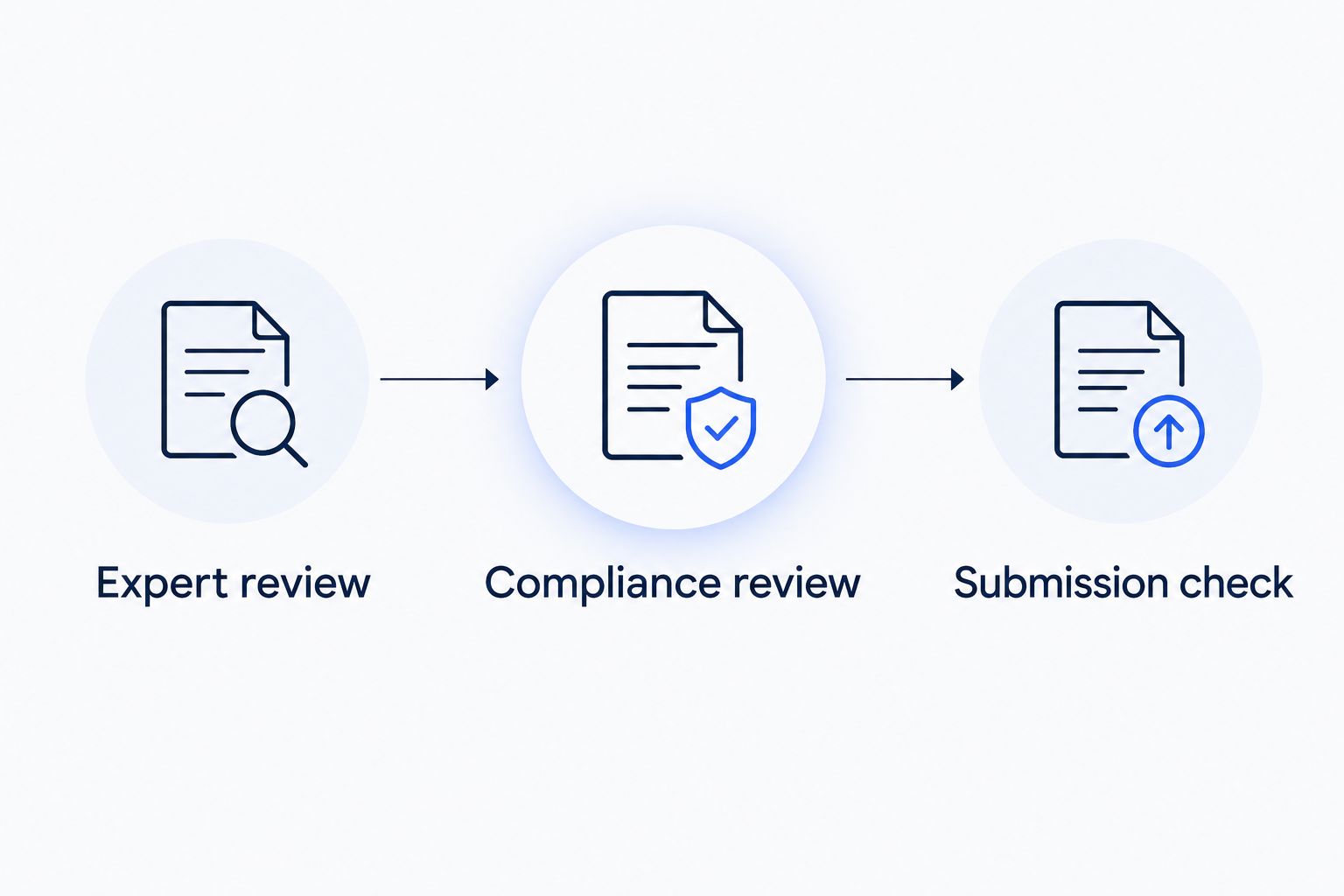
Preparation should shorten avoidable internal back-and-forth, not remove necessary review. If approval cannot happen before the deadline, decline the request rather than submit an unchecked answer.
Verdict: Use pre-approved processes; skip unattended template submissions.
4. Narrow-beat monitoring: best for small outreach teams
Narrow-beat monitoring limits requests to subjects your experts can answer well. Define the financial topic, relevant geography and intended audience before assigning responses.
For a SaaS business selling to finance teams, software buying and financial operations can be more relevant than general consumer investing. For an ecommerce payments brand, payment acceptance and merchant operations provide a different remit.
Narrow-beat monitoring pros:
- Keeps assessment focused on relevant requests.
- Makes expert ownership easier to assign.
- Helps distinguish commercial relevance from a recognisable publication name.
Narrow-beat monitoring cons:
- Excludes adjacent topics that a broader programme might pursue.
- Requires revisiting the remit as business priorities change.
Best for: Teams that need a manageable outreach scope rather than maximum submission volume.
Define the remit in writing: topics accepted, topics excluded, jurisdictions covered and available spokespeople. Evaluate US, UK and Canadian requests separately where the answer depends on local products or rules; do not reuse jurisdiction-specific commentary as universal advice.
Verdict: Use narrow-beat monitoring when expert capacity is limited; skip irrelevant requests regardless of publisher prominence.
5. Resource-supported answers: best for explanatory link opportunities
Resource-supported answers pair useful commentary with an existing page that genuinely expands on the subject. The page must help the reader; its commercial importance to your business is not enough.
In a 2026 campaign, assess the destination before suggesting it. Check factual accuracy, visible sourcing, relevance to the request and whether readers can understand the material without a sales conversation.
Resource-supported answers pros:
- Give journalists additional context beyond a short quotation.
- Connect the potential backlink to the subject being discussed.
- Encourage scrutiny of the destination's usefulness.
Resource-supported answers cons:
- Require a suitable resource to exist already.
- Do not secure a backlink simply because the answer is published.
Best for: Financial brands with relevant explainers, research or other substantive reference material.
Offer the resource as supporting context, not a condition of participation. Avoid insisting on an exact-match commercial anchor; an editorially chosen citation is different from a negotiated promotional placement.
Verdict: Use resource-supported answers when the page adds evidence or explanation; skip forced destination links.
6. Journalist relationship follow-up: best for repeat sourcing
Journalist relationship follow-up maintains an accurate record after a useful exchange. Note the journalist's beat, the expert involved, the subject covered and any stated preferences.
The objective is dependable sourcing, not repeated requests for backlinks. Distinguish a factual correction from dissatisfaction with the publisher's linking decision.
Journalist relationship follow-up pros:
- Preserves context for later, relevant requests.
- Helps avoid pitching the wrong expert repeatedly.
- Gives corrections and source updates a clear route.
Journalist relationship follow-up cons:
- Requires ongoing record maintenance.
- Becomes intrusive when every interaction turns into a pitch.
Best for: Brands treating journalist outreach as an ongoing editorial relationship.
Thank the journalist when appropriate, record the outcome and respect stated communication preferences. Do not treat a published mention as permission to send unrelated campaigns.
Verdict: Use selective follow-up to maintain relevance; skip repeated link-chasing messages.
How these tactics are ranked
The order prioritises expert fit and editorial usefulness, followed by evidence, approval readiness, destination relevance and reporting. It is a buyer decision framework, not a claim that these tactics produced measured results in a comparative test.
Expert-matched replies come first because a credible source is the foundation of the answer. The remaining tactics solve narrower problems: evidence, deadlines, capacity, supporting resources and relationship continuity.
Which HARO tactic should you choose?
Start with expert-matched replies and add only the supporting tactics your workflow needs. Research-heavy stories need evidence; short deadlines need prepared approvals; limited teams need a narrower remit.
When comparing agencies in 2026, request a sample report and ask these questions:
- How are requests screened for subject and audience relevance?
- Who writes, checks and approves the attributed answer?
- Which activities and deliverables appear in the agreement?
- Does reporting separate unlinked mentions from live backlinks?
- Are destination URLs, anchor text and link attributes recorded?
- How are removals, corrections and unsuccessful responses reported?
For Linkible, apply the same checks you would use for any agency. Request evidence of the proposed process rather than assuming a service label proves execution quality.
FAQ
What's the best HARO link building tactic for financial brands?
Expert-matched journalist replies are the best starting point for financial brands. Match each request to a source with demonstrable knowledge, then add evidence and approval checks where the subject requires them.
Can HARO outreach guarantee a backlink?
No, HARO-style outreach cannot guarantee an editorial backlink. The publisher decides whether to use the contribution, name the source and include a link.
Should a financial brand answer every relevant-sounding request?
No, respond only when the available expert can answer the specific question accurately. Check the jurisdiction, audience and scope rather than relying on a broad finance label.
Is HARO link building better than guest posting?
The methods serve different editorial situations. Journalist outreach supplies a source contribution to a reporter's story; guest posting proposes a contributed article, so choose according to the opportunity and publisher requirements.
What should a HARO link building report include?
A useful report separates submissions, published mentions and live backlinks. For each backlink, record the referring page, destination, anchor text and link attributes, with relevant dates and status checks.
Can financial brands use internal customer data in responses?
Use internal customer data only after confirming permission, privacy safeguards and the accuracy of the proposed claim. Explain the sample and its limits rather than presenting customer findings as market-wide evidence.
Does Linkible offer HARO link building?
Yes, Linkible lists HARO link building among its services, alongside outreach, niche edits and digital PR. Ask for a scope that specifies expert involvement, approval responsibilities, deliverables and reporting.
One last thing
An unlinked expert mention and a backlink are different outcomes. Keep them separate in your scorecard so editorial visibility does not get reported as link acquisition.
Before commissioning outreach, write down who is qualified to speak and which claims require approval. Then contact Linkible with your priority topics, target markets and review requirements to discuss the scope.