Compare the best broken link building tools for discovery, page checks and outreach. Choose Ahrefs for research and a focused stack for relevant links.
Best overall: Ahrefs. Best for site-wide checks: Screaming Frog SEO Spider. Best lightweight option: Check My Links. This 2026 guide to the best broken link building tools also covers Wayback Machine for replacement research and BuzzStream for outreach management.
- Ahrefs leads the best broken link building tools for backlink-led prospect discovery.
- Screaming Frog SEO Spider checks crawlable pages; Check My Links suits individual-page reviews.
- Wayback Machine helps establish what a dead resource covered before you propose a replacement.
- BuzzStream manages outreach; it does not replace broken-link discovery or relevance checks.
- Linkible suits SaaS and ecommerce teams seeking link building services rather than another software subscription.
Why this matters
Finding a broken link is not the same as finding a link opportunity. You need a relevant referring page, a genuinely useful replacement and a publisher with a reason to update the reference. A crawler answers only part of that problem.
For SaaS and ecommerce teams, the right purchase depends on the missing capability: prospect research, validation, content research or outreach execution. Linkible’s link building services are an alternative when you need agency support rather than more software to operate internally.
Buy for the bottleneck, not the longest feature list. This 2026 shortlist separates primary discovery tools from supporting tools, so you do not mistake an archive or outreach platform for a backlink database.
What makes the best broken link building tools?
Use these criteria before comparing products:
- Relevant discovery: Find referring pages that cover the same subject and serve an audience connected to your business.
- Live validation: Check whether the destination is genuinely unavailable, rather than redirected, temporarily blocked or inaccessible to one crawler.
- Replacement fit: Establish what the original resource answered and whether your page provides a useful substitute.
- Actionable records: Keep the source URL, broken destination, proposed replacement and outreach status together.
- Workflow fit: Choose a browser checker for individual pages, a crawler for site checks or a backlink database for broader discovery.
- Human control: Review publishers, destinations and messages before outreach. A detected error is not permission to send an irrelevant pitch.
For your 2026 evaluation, run each candidate through the same task. Review 10 candidate pages and record which tool helps you reach a clear outreach decision. That is a practical buying exercise, not a performance benchmark.
Broken link building tools at a glance
The order below reflects each tool’s role in a broken-link workflow. Ahrefs is the default discovery choice; the remaining options solve narrower problems or support later stages.
| Tool | Best for | Standout capability | Key limitation |
|---|---|---|---|
| Ahrefs | Backlink-led opportunity discovery | Broken backlink research in Site Explorer | Database findings still need live checks |
| Screaming Frog SEO Spider | Checking crawlable sites | Finding broken links and their source pages | A crawl does not provide a web-wide backlink index |
| Check My Links | Reviewing individual pages | Highlighting links within the browser | Page-by-page checking requires manual work |
| Wayback Machine | Understanding dead resources | Reviewing saved historical page captures | A usable capture is not guaranteed |
| BuzzStream | Managing publisher outreach | Contact, email and relationship management | It is not a broken-link discovery crawler |
Do not buy every tool by default. A researcher checking a small set of resource pages has a different requirement from a team investigating broken backlinks across competing domains.
1. Ahrefs: best broken link building tool for backlink discovery
Ahrefs is the strongest default here when you need to find broken backlink opportunities beyond pages you already know. Site Explorer supports broken backlink research, helping you investigate links that point to unavailable destinations.
Use the referring page as your starting point for qualification. A broken destination with many references is still unsuitable if those references come from unrelated subjects or pages where your replacement would make little sense.
Ahrefs pros:
- Supports backlink-led research rather than requiring a preselected page list.
- Helps you inspect referring pages and the context around a link.
- Supports wider backlink analysis alongside broken-link research.
Ahrefs cons:
- Indexed findings need checking against the live page before outreach.
- Backlink metrics do not establish editorial relevance or replacement quality.
Best for: SaaS and ecommerce teams researching relevant broken backlinks across competing or adjacent websites.
Start with 1 replacement asset and define the question it answers. Then assess broken destinations against that brief. This keeps research connected to a page you can credibly offer, rather than producing a spreadsheet of unrelated errors.
Verdict: Buy for backlink-led discovery; skip if you only need to check a handful of known pages.
2. Screaming Frog SEO Spider: best for site-wide link checks
Screaming Frog SEO Spider crawls websites and reports response codes and link sources. It is useful when you already know which site or page collection you want to inspect.
Its role differs from Ahrefs. A crawl follows accessible links within its configuration; it does not reveal every website linking to a broken resource across the web.
Screaming Frog SEO Spider pros:
- Finds broken links within the pages it crawls.
- Identifies source pages so you can locate the reference.
- Supports structured exports for review and follow-up.
Screaming Frog SEO Spider cons:
- Crawl scope and access restrictions affect what it discovers.
- A broken-link report does not identify the right publisher contact or replacement content.
Best for: Teams checking known publisher sites, resource libraries or their own content collections.
Separate broken internal links from broken external references before building an outreach list. An internal navigation error is usually a maintenance issue for that website, not an opening for your unrelated article.
For a 2026 buying decision, choose Screaming Frog SEO Spider when controlled crawling is the missing capability. Do not buy it expecting a substitute for backlink discovery.
Verdict: Buy for site-level validation; skip as your only prospect-discovery tool.
3. Check My Links: best for individual-page reviews
Check My Links is a browser extension that checks links on a page and highlights their status. It suits hands-on review of a resource page, article or directory you have already identified.
The advantage is proximity to context. You can inspect the surrounding paragraph while reviewing the link, rather than making every decision from an exported row.
Check My Links pros:
- Keeps link checks close to the page you are reviewing.
- Helps locate broken references within visible content.
- Fits a manual research workflow without a site-wide crawl.
Check My Links cons:
- Page-by-page inspection becomes repetitive across a large prospect list.
- A failed check still needs confirmation before you tell a publisher the link is broken.
Best for: Founders, marketers and researchers reviewing a limited set of relevant pages manually.
Open the destination separately before recording an opportunity. A failed request can reflect access restrictions or a temporary problem; it does not automatically mean the resource has disappeared.
Verdict: Buy into this workflow for focused page reviews; skip it as your primary large-list research method.
4. Wayback Machine: best for researching replacement fit
The Internet Archive’s Wayback Machine provides access to saved historical versions of web pages. When a useful capture exists, it helps you understand the subject, format and purpose of a dead resource.
That matters because matching a keyword is not enough. A product category page does not replace an independent research report simply because both mention the same topic.
Wayback Machine pros:
- Helps establish what a missing page originally covered.
- Reveals whether the original format was a guide, directory, study or another resource.
- Supports a more specific replacement pitch than a guess based on the URL.
Wayback Machine cons:
- Captures can be missing or incomplete.
- Historical content does not establish current accuracy or permission to reuse material.
Best for: Teams checking whether an existing or planned asset genuinely replaces a dead resource.
Use archive research to identify the information need, not to copy the original page. Build your own useful answer and check that the surrounding publisher text still supports linking to it.
Verdict: Use for replacement research; skip as a standalone broken-link finder.
5. BuzzStream: best for managing broken-link outreach
BuzzStream supports contact research, email outreach and relationship management. Its role begins after you have qualified the publisher and identified a suitable replacement.
For a team sharing outreach responsibilities, the important question is operational: can everyone see who contacted the publisher, what was proposed and what happened next?
BuzzStream pros:
- Organises publisher contacts and outreach records.
- Supports email campaigns and follow-up management.
- Helps teams maintain a shared history of publisher conversations.
BuzzStream cons:
- Does not replace a crawler or backlink database for discovery.
- Organised sending cannot repair weak targeting or an irrelevant replacement.
Best for: Teams managing publisher communication across a qualified prospect list.
Before importing contacts, remove duplicate publishers and check existing conversations. Treat follow-ups as editorial communication, not a reason to repeat the same request indefinitely.
Verdict: Buy for outreach coordination; skip until you have qualified prospects worth contacting.
Turn tool output into a qualified outreach list
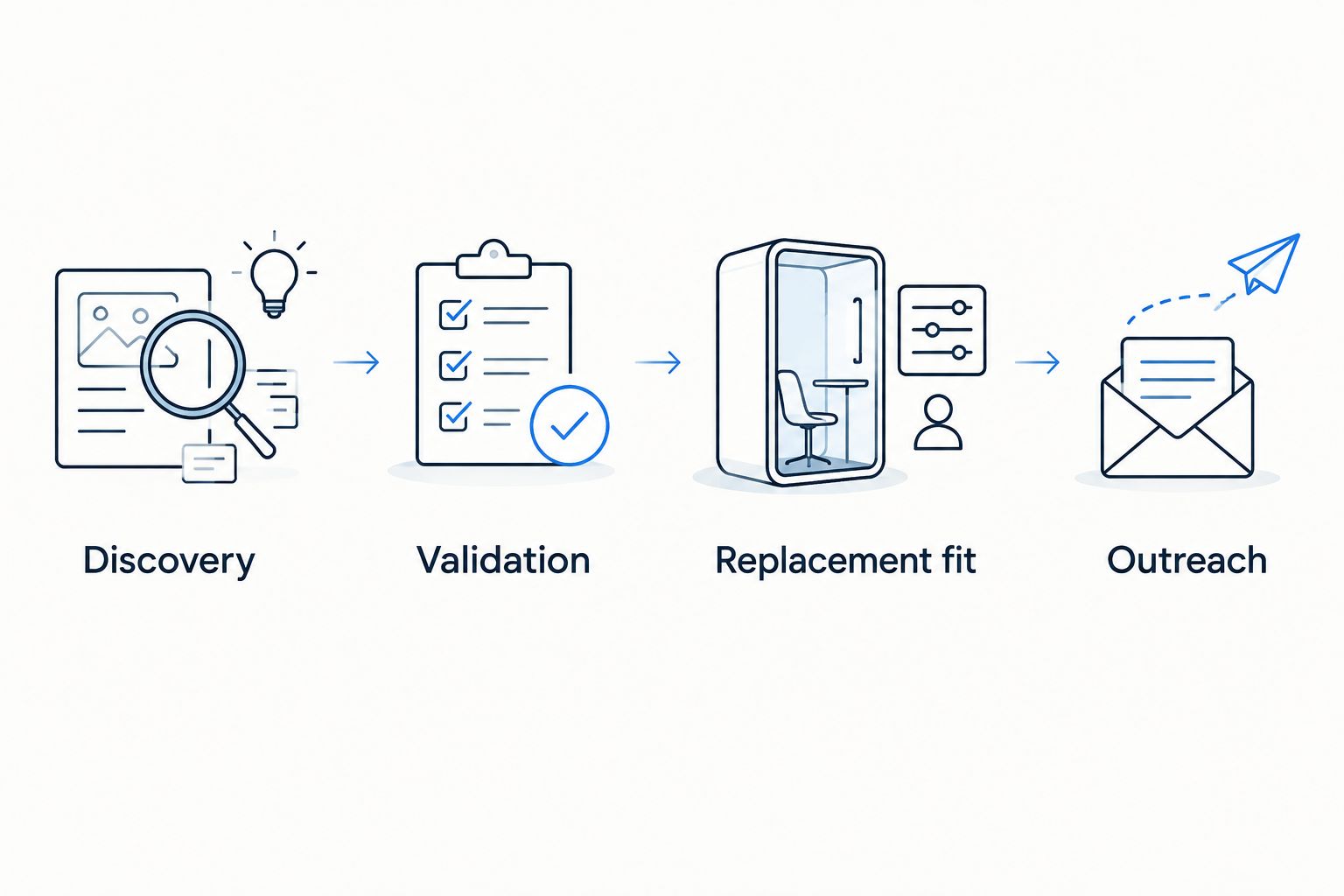
A useful 2026 workflow moves through four gates. Keep rejected prospects out of your sending queue rather than carrying them forward because a tool found an error.
Discovery
Find a broken destination on a relevant publisher page. Record the source page and the exact destination, not just the publisher’s homepage.
Validation
Check the source and destination live. Confirm that the reference still exists and distinguish a genuinely missing page from a redirect or access problem.
Replacement fit
Compare the original information need with your proposed page. Check subject, audience, format and the sentence surrounding the link.
Outreach
Identify an appropriate contact and explain the specific problem. Show why the replacement helps readers without implying that the publisher owes you a backlink.
For an agency evaluation, ask for 5 sample prospects with written reasons for inclusion. Review those reasons before discussing a larger campaign. The sample should demonstrate judgement, not merely show that software can export URLs.
Linkible offers white-hat outreach, niche edits, digital PR and HARO link building. When evaluating Linkible or another agency, request clear publisher criteria, an explanation of manual outreach methods and reporting that distinguishes attempted outreach from published links.
How this ranking works
This ranking prioritises discovery usefulness, live validation, replacement research and outreach organisation. It compares functions, not claimed ranking gains, proprietary test scores or an invented success rate.
Ahrefs leads because backlink discovery is the central research task in this guide. Screaming Frog SEO Spider and Check My Links cover narrower validation needs. Wayback Machine and BuzzStream are supporting tools, not direct substitutes for discovery software.
For every option, the limitation is part of the recommendation. No tool can establish publisher interest or make an unsuitable replacement relevant.
Which broken link building tools should you choose?
Choose Ahrefs if you need a default starting point for backlink-led research. Add Screaming Frog SEO Spider when you need controlled site crawling, or Check My Links when individual-page inspection is enough.
Use Wayback Machine where historical context improves the replacement decision. Add BuzzStream when contact management becomes a real operational problem, not simply because it appears in a recommended stack.
If you need people to handle outreach rather than software to operate yourself, evaluate Linkible as a link building agency. Keep the brief centred on relevant publishers, suitable destination pages and transparent deliverables—not a promised ranking position.
FAQ
What are the best broken link building tools in 2026?
Ahrefs is the default recommendation for backlink-led discovery. Screaming Frog SEO Spider and Check My Links support validation, while Wayback Machine and BuzzStream support research and outreach.
Is Ahrefs better than Screaming Frog for broken link building?
Ahrefs is better suited to researching broken backlinks across websites; Screaming Frog SEO Spider is better suited to crawling known sites. Choose according to whether you need discovery or controlled site checks.
Can I do broken link building with a browser extension?
Yes, a browser extension such as Check My Links can support individual-page checks. You still need to confirm the error, assess relevance and find an appropriate publisher contact.
Does a broken link mean a publisher will accept my replacement?
No, a broken link does not establish publisher interest. Your replacement must fit the original reference, and the publisher controls whether to update it.
Should ecommerce brands pitch product pages as replacements?
Only when the product page genuinely fits the original reference. A commercial page is not an equivalent replacement for an educational guide or independent study.
What should a broken link building report include?
Request the source URL, broken destination, proposed replacement, outreach status and any resulting published URL. Keep attempted outreach separate from confirmed placements.
Should I buy tools or hire a link building agency?
Buy tools when your team can own research, content assessment and outreach. Evaluate an agency when you need those activities delivered as a service, and agree the scope before work begins.
One last thing
The strongest replacement decision starts with the publisher’s sentence, not your preferred anchor text. Read that sentence aloud with your proposed page in place. If the reference stops making sense, reject the opportunity.
For your 2026 brief, define the target audience, destination pages and publisher acceptance criteria before buying another subscription. Then contact Linkible to discuss link building support against that brief.