Find the best white label link building services for your agency. Compare outreach models, publisher quality, reporting and reseller terms before choosing.
Best overall: managed editorial outreach. Best for expert-led SaaS content: guest contributions. Best for existing-content placements: niche edits. To choose the best white label link building services in 2026, compare the delivery model first, then verify publisher relevance, placement methods and reseller terms.
- The best white label link building services combine relevant publishers, clear approval rights and client-ready reporting.
- Choose managed editorial outreach for ongoing campaigns; guest contributions for expert-led content.
- Evaluate Linkible for SaaS and ecommerce link building; confirm white-label terms before committing.
- Reject undisclosed placement methods, forced anchor text and reports that hide live URLs.
Why this matters
Your client sees your agency's recommendation, not the subcontractor behind it. A provider that delivers irrelevant placements or hides its methods creates a problem your account team must explain.
Linkible is a relevant link building agency to evaluate for SaaS and ecommerce brands. Its stated services include white-hat outreach, niche edits, digital PR and HARO link building. Start with Linkible to assess service fit, then ask explicitly about reseller permissions, reporting and client confidentiality.
White-label delivery is a contractual arrangement, not a link-building technique. This guide ranks service models by buyer need rather than presenting an unsupported league table of agencies. A provider belongs on your shortlist only after its actual terms match your client commitments.
What makes the best white label link building services?
Use these criteria before comparing proposals in 2026:
- Publisher relevance: The website, article and linking passage should make sense for your client's audience.
- Outreach methods: Ask how publishers are selected, contacted and compensated, and who controls publication.
- Editorial standards: Require useful content and natural anchor text rather than placements written around a keyword.
- Approval rights: Establish what you approve before outreach, content production and publication.
- Transparent reporting: Require live URLs, target pages, anchor text, link attributes and delivery status.
- Reseller controls: Confirm confidentiality, report branding, account ownership and direct-contact restrictions in writing.
A domain-level authority score does not answer these questions. Treat it as a screening input, not proof that a particular placement deserves your client's name.
White-label service models at a glance
| Rank and service model | Best for | Standout feature | Key limitation |
|---|---|---|---|
| 1. Managed editorial outreach | Ongoing multi-page campaigns | Coordinates prospecting, outreach and placement management | Requires visibility into methods and publisher selection |
| 2. Expert guest contributions | SaaS brands with specialist knowledge | Builds a useful article around genuine expertise | Requires editorial input and content approval |
| 3. Niche edits | Adding relevant references to existing articles | Places a reference within already-published content | Existing content can still be irrelevant or unsuitable |
| 4. Digital PR | Brands with original research or news | Gives publishers a reason to cover a story | Coverage and links remain editorial decisions |
| 5. Journalist-response outreach | Brands with available subject experts | Connects expert commentary with specific requests | Depends on request fit, timing and attribution rules |
The ranking reflects service fit, not promised ranking gains. The right choice depends on the client's content, available expertise and willingness to support editorial work.
1. Managed editorial outreach: best for ongoing campaigns
Managed editorial outreach coordinates publisher research, pitching, follow-up and placement tracking. It suits agencies that need an accountable delivery process across several target pages rather than isolated link orders.
For SaaS clients, the brief should connect publishers to the product's buyers and use cases. For ecommerce clients, it should connect coverage to relevant categories, products or supporting guides. Broad topic overlap alone is not enough.
Managed editorial outreach pros:
- Gives your agency a single workflow for prospecting and delivery.
- Supports campaigns across different target pages.
- Allows publisher criteria to reflect each client's audience.
- Makes approvals and reporting part of the service brief.
Managed editorial outreach cons:
- Outsourcing can obscure weak prospecting unless reporting exposes it.
- Publisher responses and editorial decisions remain outside your control.
- Campaign quality depends on the brief and ongoing oversight.
Ask for an example report and an explanation of how a rejected prospect is handled. Establish whether the provider contacts publishers individually, uses existing relationships or relies on placement inventory; those are different delivery methods.
Best for: Agencies managing recurring SaaS or ecommerce link-building campaigns.
Verdict: Buy managed editorial outreach when publisher selection, approvals and reporting are explicit.
2. Expert guest contributions: best for specialist SaaS content
Expert guest contributions place an original article with a relevant publication. The article should solve a reader's problem; any backlink needs to support that explanation rather than interrupt it.
This model fits SaaS brands whose teams can contribute practical knowledge. A useful pitch starts with the publication's audience and an original argument, not a request to insert a commercial anchor.
Expert guest contributions pros:
- Give specialist knowledge room for a substantive explanation.
- Allow your team to review the proposed argument and supporting references.
- Create context for a relevant supporting link.
- Provide a clear content deliverable for approval.
Expert guest contributions cons:
- Require writing, subject expertise and revision time.
- Publishers can change attribution, links or final wording.
- A guest-post label does not establish publication quality.
Before approving a publisher, read other contributor articles. Check whether the publication serves a recognisable audience or mainly publishes unrelated articles containing commercial links.
Best for: SaaS brands with subject experts and useful educational content.
Verdict: Buy expert guest contributions when the article has value without the backlink.
3. Niche edits: best for existing-content relevance
Niche edits add a link to an already-published article. The relevant question is whether the destination genuinely improves that passage, not simply whether the page already exists.
For an ecommerce campaign, a relevant reference might support a buying explanation or product-care discussion. That is an evaluation example, not permission to add a commercial link wherever the surrounding topic loosely matches.
Niche edits pros:
- Allow assessment of the existing article before a proposed placement.
- Avoid requiring a new standalone guest article.
- Make the surrounding passage available for contextual review.
Niche edits cons:
- Existing pages can contain outdated or weak content.
- An inserted link can read as an unrelated addition.
- Payment arrangements can create link-spam concerns.
Google's published link-spam policies cover buying links for ranking purposes. Paid placements should use appropriate link attributes, such as rel="sponsored"; a white-label arrangement does not change that requirement.
Ask how the publisher approves additions and whether the provider discloses compensation. Reject forced exact-match anchors or placements justified only by a domain score.
Best for: Brands with a resource that directly improves an existing article.
Verdict: Hold niche edits until you have reviewed the page, proposed passage and placement terms.
4. Digital PR: best for original stories and research
Digital PR pitches a newsworthy story, research finding or useful asset to relevant publications. It works as a supporting service when your client has something a journalist can independently assess.
The deliverable should distinguish research, asset production and outreach from editorial outcomes. A published mention does not necessarily include a backlink, and a backlink does not establish that the coverage reached the right audience.
Digital PR pros:
- Gives outreach a substantive reason beyond requesting a link.
- Supports stories built around original expertise or evidence.
- Can connect a brand with publications relevant to its market.
Digital PR cons:
- Requires a defensible story and supporting material.
- Journalists control whether coverage includes a link.
- Coverage can be unsuitable for the client's commercial objectives.
For a 2026 campaign, review how the provider checks data, documents sources and handles corrections. Your agency should approve factual claims before pitching begins.
Best for: Brands with original research, useful assets or a credible news angle.
Verdict: Buy digital PR when the story stands independently of the link-building objective.
5. Journalist-response outreach: best for available subject experts
Journalist-response outreach matches relevant media requests with expert commentary. HARO-style work belongs in this category, but the brief should specify the actual channels used rather than rely on a service label.
This model needs a real expert who can review and approve responses. Ghostwritten commentary must accurately reflect that person's knowledge and position.
Journalist-response outreach pros:
- Starts with a defined editorial request.
- Lets a specialist answer a focused question.
- Supports selective outreach rather than unrelated pitching.
Journalist-response outreach cons:
- Depends on suitable requests and responsive experts.
- Commentary can be accepted without a backlink.
- Attribution requirements can conflict with anonymous reseller delivery.
White-label account management does not mean anonymous expertise. Confirm whether the client's expert must be named publicly and who approves quotations before submission.
Best for: Brands with accessible specialists who can provide attributable commentary.
Verdict: Buy journalist-response outreach when expert access and approval responsibilities are clear.
How to evaluate a provider before signing
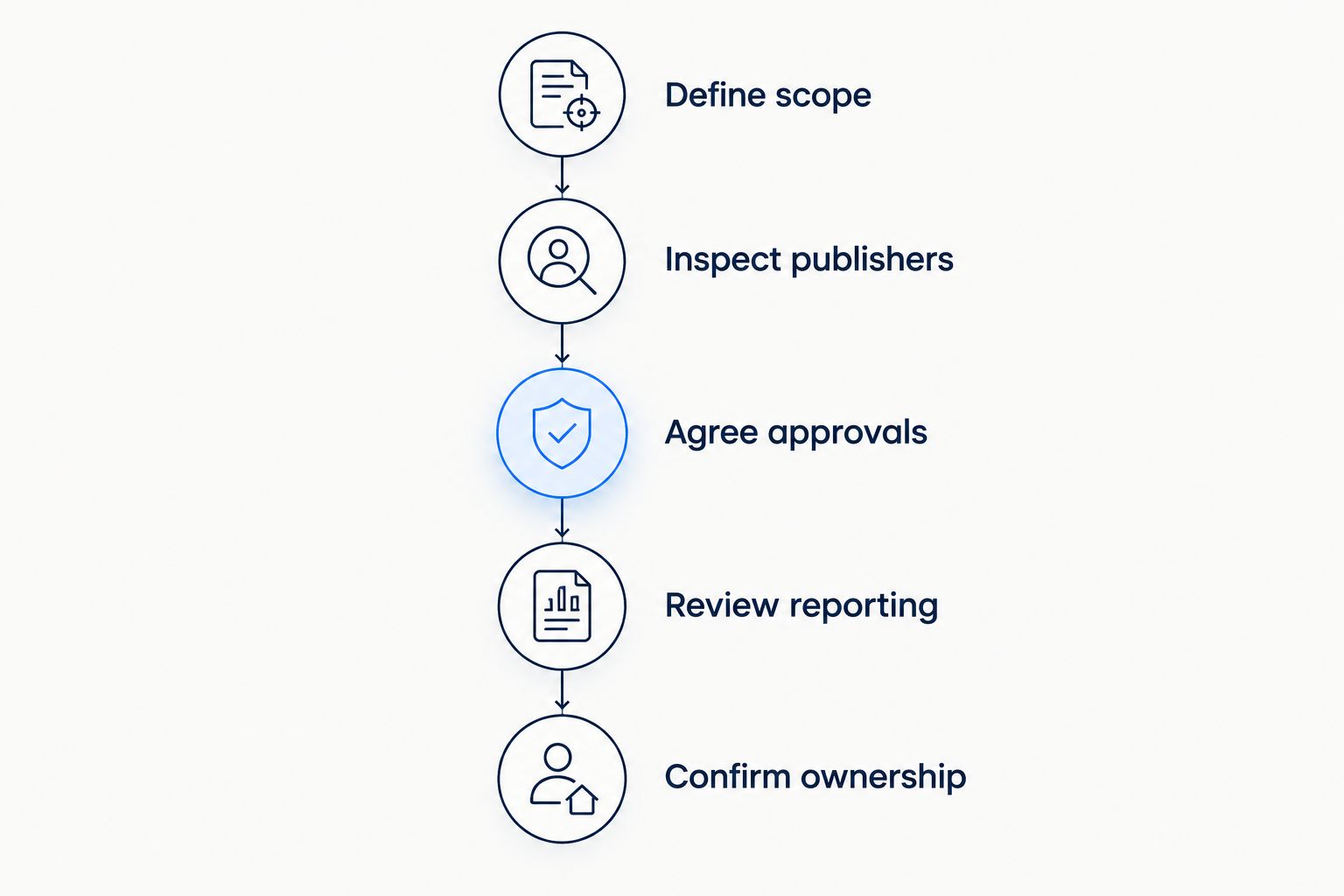
Use this sequence for your 2026 shortlist. It keeps the discussion on deliverables rather than sales claims.
Define scope
Choose 2 target pages for an initial brief and explain the audience, commercial purpose and relevant topics for each. This is a scoping recommendation, not a required campaign size. Include excluded subjects and any restrictions on competitor references.
Inspect publishers
Request 3 example placements and review the publisher, article and linking passage separately. Look for a clear audience, editorial consistency and a destination that helps the reader. Examples demonstrate a method; they do not guarantee identical future placements.
Agree approvals
Document who approves prospects, content, anchors and changes. Specify what happens when a publisher rejects a pitch or alters an agreed article. Do not leave editorial control implied.
Review reporting
Ask for a sample report showing live URLs, target pages, anchor text, link attributes and status. Separate outreach activity from published outcomes so your client can see what has actually happened.
Confirm ownership
Record confidentiality, report branding, client-contact permissions and account responsibilities. Agree on the process for changed or removed links without assuming that replacements are included.
How we ranked the service models
Managed outreach ranks first because it covers the broadest ongoing campaign brief. Guest contributions rank next for brands with expertise; niche edits address existing-content opportunities. Digital PR and journalist-response outreach require specific assets or expert access.
The criteria are publisher relevance, outreach transparency, editorial quality, approval rights, reporting and reseller controls. This is a buyer-fit ranking, not a claim that one method produces a measured advantage over another.
Which service should you choose?
Choose managed editorial outreach as the default for an ongoing white-label programme. Add expert contributions when your client has something useful to teach, and use digital PR when there is a genuine story to pitch.
Evaluate Linkible's link building services against the same standards. Confirm the white-label arrangement separately from the underlying service: confidentiality, branded reports and account boundaries need written agreement.
In 2026, reject any proposal that treats an authority score or a link count as the complete definition of success. Your client needs relevant placements and an accountable delivery process, not an unexplained spreadsheet.
FAQ
What's the best white label link building service for an agency?
Managed editorial outreach is the default choice for an agency that needs ongoing campaign delivery. Evaluate publisher relevance, approval rights, reporting and reseller terms before choosing a provider.
Does Linkible offer white-label link building?
Confirm white-label delivery directly with Linkible before including it in a client proposal. Its stated services include white-hat outreach, niche edits, digital PR and HARO link building; reseller terms require separate confirmation.
Are niche edits better than guest contributions?
Niche edits suit relevant references in existing articles, while guest contributions suit original educational content. Neither format establishes quality without reviewing the publisher, article and placement method.
What should a white-label backlink report include?
A white-label backlink report should include live URLs, target pages, anchor text, link attributes and delivery status. Keep outreach activity separate from published placements.
Can a link-building provider guarantee rankings?
A provider cannot control Google's ranking decisions. Assess its delivery commitments and methods rather than treating ranking promises as evidence.
How do I check whether outreach is genuinely editorial?
Ask how publishers are selected, contacted and compensated, and who controls publication. Review example placements and require disclosure of arrangements that affect link attributes.
Should I use digital PR for every client?
Use digital PR when the client has a credible story, original research or a useful asset. Choose another service when the brief is primarily an ongoing publisher-outreach requirement.
One last thing
Ask to see the report before you sign the proposal. A sample report exposes what the provider considers a completed deliverable and what your account team will need to explain.
Next step: visit Linkible, find its current website enquiry route, and send your target pages, audience and reporting requirements. Request written confirmation of white-label terms before committing your client's campaign.