Best digital PR tactics for ecommerce brands: original-data stories lead. Compare six approaches, their limits and agency checks before you commit.
Best overall: original-data stories. Best for product-led coverage: editorial product seeding. Best for lower production overhead: expert commentary. The best digital PR tactics for ecommerce brands in 2026 give publishers something useful to cite; Linkible offers link building and supporting digital PR services for brands evaluating agency support.
- Original-data stories lead the best digital PR tactics for ecommerce brands when the evidence supports a relevant headline.
- Linkible suits ecommerce teams seeking link building with supporting digital PR services.
- Choose product seeding for hands-on coverage and expert commentary when you have credible category expertise.
- Judge campaigns by relevant editorial links, useful landing pages and transparent reporting—not coverage totals alone.
Why this matters
A press mention and a useful backlink are different deliverables. An article can name your store without linking, while a link can point somewhere that does little to help readers understand your products.
Your brief must separate brand exposure, referral visits and link acquisition. When organic search is the priority, choose stories that connect a publisher’s audience to a relevant page on your site. Do not treat publicity as a guarantee of rankings.
What makes the best ecommerce digital PR tactics?
Use these criteria to evaluate your 2026 campaign before approving outreach:
- Publisher relevance: The publication covers your category or a closely related customer problem.
- Evidence quality: Claims have a clear source, method and scope that an editor can inspect.
- Editorial usefulness: The pitch offers reporting material, not just a product announcement.
- Link destination: The proposed page helps readers verify the story or explore its subject.
- Execution fit: Your team can supply the expertise, assets and approvals the tactic requires.
- Reporting clarity: Coverage, backlinks and search outcomes appear separately, with no implied causal shortcut.
Linkible is best suited to ecommerce teams seeking link building with digital PR support. When evaluating any agency, ask how it selects relevant publishers, conducts manual outreach and reports placements. Those are buying criteria, not reasons to accept an unsupported performance promise.
Ecommerce digital PR tactics at a glance
| Rank | Tactic | Best for | Standout feature | Key limitation |
|---|---|---|---|---|
| 1 | Original-data stories | Brands with publishable first-party evidence | Gives journalists a source to cite | Weak methods undermine the story |
| 2 | Editorial product seeding | Products that benefit from hands-on assessment | Lets writers assess the product directly | Neither coverage nor links are guaranteed |
| 3 | Expert commentary | Brands with credible category specialists | Adds useful interpretation to existing stories | Requires relevant expertise and responsive approvals |
| 4 | Seasonal resource campaigns | Predictable customer questions | Creates a reusable reference around a recurring need | Generic calendars offer little editorial value |
| 5 | Reactive news commentary | Brands with timely, relevant expertise | Connects a useful response to an active story | Poorly judged timing damages credibility |
| 6 | Partnership-led research | Brands needing complementary evidence | Combines distinct sources and distribution relationships | Shared approval and ownership complicate delivery |
1. Original-data stories: best for evidence-led ecommerce coverage
Original-data stories turn information your business can legitimately analyse into a finding a journalist can interrogate. Suitable material includes aggregated product questions, category-level purchasing patterns or documented product testing. Publish the method alongside the finding so the evidence can stand independently of the pitch.
Best for: Ecommerce brands with usable first-party evidence and permission to publish it.
Original-data stories pros:
- Give publishers an identifiable source for a claim.
- Support a reference page with a clear reason to link.
- Connect outreach to genuine category knowledge.
Original-data stories cons:
- Incomplete or biased data limits the conclusions you can draw.
- Analysis, privacy checks and editorial review require internal input.
Start with a customer question, not a headline you want the data to prove. State what the dataset represents and what it excludes. Store orders, for example, describe your customers; they do not automatically describe an entire national market.
For a 2026 campaign, identify the collection period explicitly rather than presenting older observations as current behaviour. Keep the useful evidence accessible on the cited page.
Verdict: Buy into original-data stories when the method is defensible; skip conclusions your evidence cannot support.
2. Editorial product seeding: best for hands-on product coverage
Editorial product seeding puts a product in front of a relevant writer for independent consideration. The editorial reason matters: the writer needs a useful product angle, not an obligation to publish a favourable review or insert a link.
Best for: Ecommerce brands whose products benefit from inspection, use or comparison.
Editorial product seeding pros:
- Gives writers direct experience rather than a rewritten sales description.
- Supports product-specific coverage and original observations.
- Creates a clear connection between the article subject and a product page.
Editorial product seeding cons:
- Sending a product does not secure coverage or a backlink.
- Independent assessments can include criticism.
Check the writer’s recent work before offering a sample. Confirm the subject fits their coverage, explain what they can assess, and provide factual product information without scripting their judgement.
Keep editorial sampling separate from paid promotion. If an arrangement includes payment, required coverage or another commercial obligation, establish the disclosure and link-treatment requirements before proceeding. Do not report a purchased placement as independently earned coverage.
Verdict: Buy into product seeding when hands-on assessment adds value; skip arrangements that require disguised endorsements.
3. Expert commentary: best for lower production overhead
Expert commentary supplies a journalist with a direct answer, explanation or caution from a qualified spokesperson. It avoids building a separate research asset, but it still demands preparation: verified credentials, clear subject boundaries and an approval process that does not stall every response.
Best for: Ecommerce businesses with founders, product specialists or category experts who can explain customer decisions.
Expert commentary pros:
- Uses expertise your business already possesses.
- Fits specific questions in an existing editorial assignment.
- Can explain product trade-offs without a promotional pitch.
Expert commentary cons:
- Generic opinions give a journalist little reason to quote you.
- A published quote does not necessarily include a link.
Prepare a spokesperson brief covering credentials, approved subjects and evidence for recurring claims. Then answer the actual question. A useful contribution explains a decision or corrects a misconception; it does not force your brand into every sentence.
For your 2026 outreach brief, define who can approve technical statements and which claims need supporting documentation. Never manufacture expertise to fit a journalist’s request.
Verdict: Buy into expert commentary when the spokesperson has direct knowledge; skip requests outside that expertise.
4. Seasonal resource campaigns: best for recurring customer questions
Seasonal resource campaigns give publishers a useful reference around a predictable event or customer need. Examples include a documented care guide, a category-specific preparation checklist or an evidence-based explanation of seasonal product choices.
Best for: Brands with recurring customer questions and the capacity to maintain the resource.
Seasonal resource campaigns pros:
- Let your team prepare assets before the relevant editorial window.
- Connect useful information to an identifiable category need.
- Produce reference material that remains useful beyond an individual pitch.
Seasonal resource campaigns cons:
- Generic shopping calendars provide little original reporting material.
- Outdated guidance weakens the value of the linked page.
Build around a problem your customers actually raise. A resource should answer that problem without requiring a purchase, while still making the relationship to your category obvious.
Assign an owner to review time-sensitive information. For a 2026 seasonal campaign, check dates, evidence and product references before outreach begins. Reusing a page does not remove the need to check its contents.
Verdict: Buy into seasonal resources when the customer question repeats; skip calendar hooks with no useful answer behind them.
5. Reactive news commentary: best for relevant breaking stories
Reactive commentary responds to a developing story with expertise that helps explain it. The contribution must add something: a practical implication, a documented correction or a category-specific consequence that the existing coverage has not addressed.
Best for: Ecommerce teams with credible specialists and a clear route for approving timely responses.
Reactive news commentary pros:
- Responds to an editorial need already in progress.
- Makes specialist knowledge useful outside product promotion.
- Creates opportunities to explain changes affecting customers.
Reactive news commentary cons:
- The opportunity can close before internal approval arrives.
- Irrelevant or insensitive pitches create reputational risk.
Define acceptable topics before a story breaks. Product safety, health, finance and legal issues require appropriate expertise; selling a related product does not establish that expertise.
Avoid inserting your brand into distressing events merely to gain attention. If your spokesperson cannot improve the reader’s understanding, do not send the pitch.
Verdict: Hold until relevance and expertise are clear; skip reactive outreach driven only by a trending headline.
6. Partnership-led research: best for complementary evidence
Partnership-led research combines information or expertise from organisations with a legitimate connection to the topic. A retailer and a relevant specialist organisation, for example, can contribute different perspectives without pretending either represents the whole market.
Best for: Ecommerce brands that need complementary knowledge to answer a worthwhile research question.
Partnership-led research pros:
- Adds evidence or expertise your business lacks.
- Gives each contributor a substantive role in the story.
- Expands the set of relevant editorial relationships to approach.
Partnership-led research cons:
- Shared approvals complicate publication and outreach.
- Unclear ownership creates disputes over data, attribution and destinations.
Agree the research question, publication rights and methodology before collecting material. Name the primary source page and explain each contributor’s role. Partnerships should improve the evidence, not disguise a link-exchange arrangement.
Verdict: Buy into partnership-led research when contributions are distinct; skip collaborations built around reciprocal links alone.
How the tactics are ranked
This 2026 ranking prioritises editorial usefulness, evidence quality, relevant link destinations and execution fit. Original-data stories lead because a documented source gives publishers a clear citation target. The order changes when your business lacks the inputs: a credible product specialist is more useful than an unsupported research headline.
Turn the tactic into an accountable agency brief
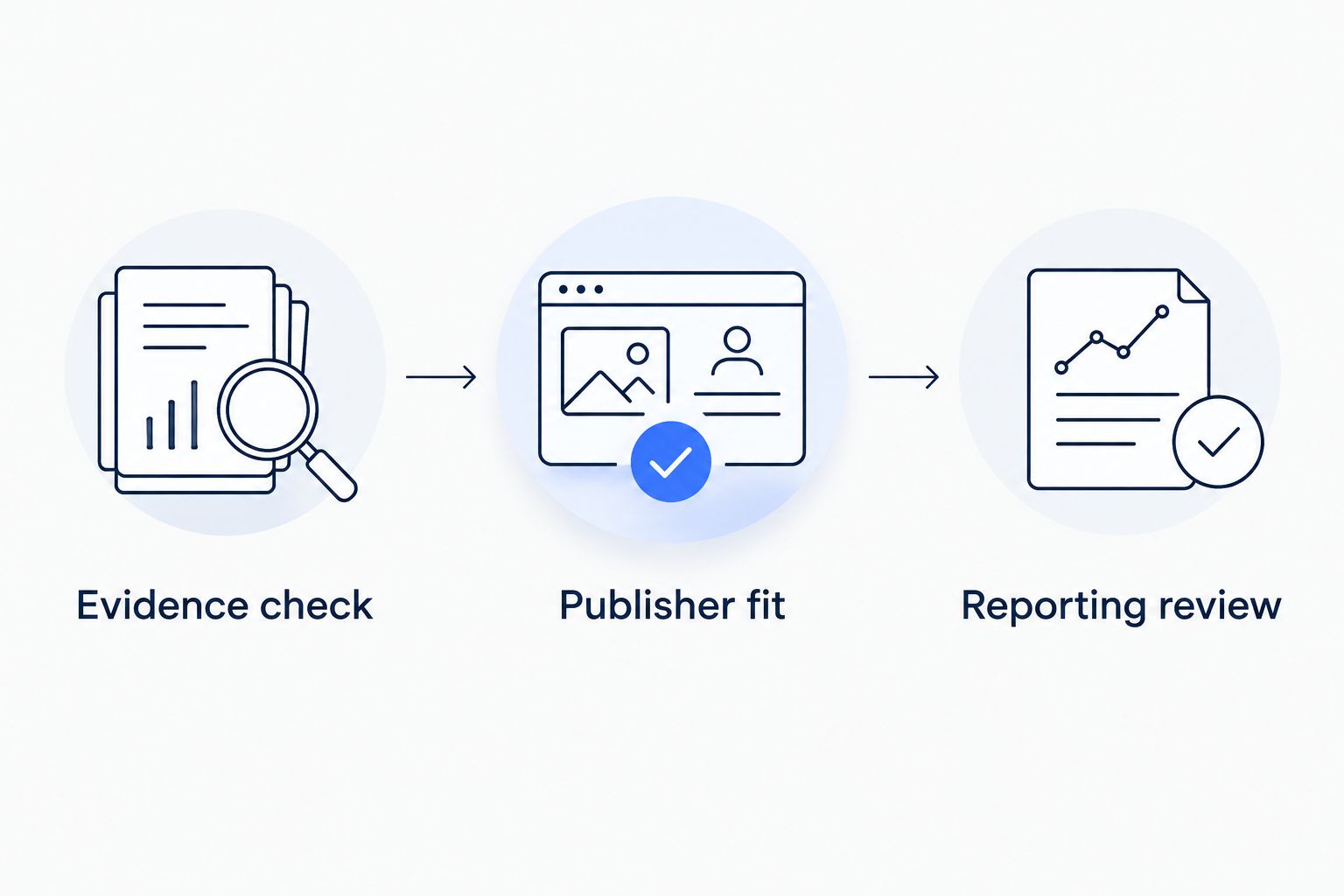
Use 3 approval gates before outreach begins. Each gate should produce a decision your team can review, rather than a vague promise of exposure.
- Evidence check: Approve the claims, source material and publication permissions.
- Publisher fit: Approve the audience, editorial topic and reasons for contacting each prospect.
- Reporting review: Agree how placements, link attributes and campaign outcomes will be recorded.
Choose 1 primary landing page for each campaign story. It should contain the evidence or explanation the pitch asks a publisher to reference. Do not force every earned link towards a commercial page that cannot substantiate the story.
Require 5 reporting fields for each placement: publisher URL, linked destination, anchor text, link attribute and publication date. Record unlinked mentions separately. Ask the agency to distinguish agreed deliverables from editorial decisions it cannot control.
Linkible offers white-hat outreach, niche edits, digital PR and HARO link building. Ask for a proposal that explains which service fits your evidence, how publishers are selected and what reporting you will receive—not a bundle of unrelated tactics.
Which ecommerce digital PR tactic should you choose?
Choose original-data stories by default only when you have publishable evidence. Without it, start with expert commentary or product seeding, depending on whether your strongest asset is specialist knowledge or a product that benefits from hands-on assessment.
Keep the initial brief focused. Specify the customer question, intended publishers, source page and approval owner. Expand the campaign after you can assess the quality of the outreach and resulting coverage—not because an agency offers more activity.
FAQ
What's the best digital PR tactic for an ecommerce brand?
Original-data stories are the strongest starting point when an ecommerce brand has reliable, publishable evidence. Choose expert commentary or product seeding instead when those better match your available expertise and products.
Is digital PR the same as ecommerce link building?
No. Digital PR pursues editorial attention through stories, evidence and expertise, while ecommerce link building focuses on acquiring relevant backlinks. A digital PR campaign can produce both linked coverage and unlinked mentions.
Can digital PR guarantee backlinks or rankings?
No. Independent publishers decide whether to cover a story and include a link, and rankings depend on more than a campaign. Separate contracted work from outcomes the agency does not control.
Should digital PR links point to product pages or research pages?
Digital PR links should point to the page that best supports the publisher's reference. Research coverage needs accessible evidence; a hands-on product article has a different reason to reference a product page.
What should an ecommerce brand ask a digital PR agency?
Ask how the agency checks evidence, selects relevant publishers, conducts outreach and reports placements. Also confirm who approves claims and how unlinked mentions, paid arrangements and editorial links are distinguished.
How should ecommerce brands measure digital PR in 2026?
Measure relevant coverage, linked destinations, referral visits and search performance separately. A change after publication does not by itself prove that digital PR caused the change.
One last thing
Your best citation target is not automatically your highest-priority sales page. If the story depends on evidence, publish that evidence where a journalist can inspect it. Then make the route from the resource to relevant products useful to readers, rather than forcing the editorial link.
For your next campaign, use Linkible's contact page to outline your category, target markets, available evidence and link-building objective. Ask for a proposed tactic, publisher-selection criteria and reporting scope before approving outreach.