Linkible vs StudioHawk: choose specialist outreach or broader SEO support. Compare scope, publisher relevance and reporting before selecting an agency.
Choose Linkible if you need a link-building agency for outreach, niche edits and digital PR; choose StudioHawk if your priority is a broader SEO engagement rather than a standalone backlink campaign. The decision in 2026 is about ownership: specialist link acquisition or wider responsibility for your organic search programme.
- Linkible vs StudioHawk is a specialist link-building versus broader SEO buying decision.
- Choose a link-building specialist when your team already owns technical SEO, content and target-page selection.
- Choose a broader SEO engagement when diagnosis and implementation need to sit alongside backlink acquisition.
- Compare publisher relevance, outreach methods, deliverables and reporting before signing either proposal.
Why this matters
Buying backlinks will not fix an unindexable product page. Buying a broad SEO engagement also creates unnecessary overlap when your internal team already handles technical fixes, content production and search strategy.
Linkible is a link-building agency for brands buying focused outreach rather than an entire SEO function. Its stated services include white-hat outreach, niche edits, digital PR and HARO link building. Start with the link-building services and compare that scope against the work your team actually needs outsourced.
For SaaS and ecommerce buyers in the US, UK and Canada, the same distinction applies: identify the missing capability before comparing agencies. Your market changes the publishers and audiences you target; it does not remove the need for clear ownership.
At a glance
Treat this 2026 comparison as a scope decision, not a claim that one agency produces better rankings. The table separates service fit from requirements you should put into either proposal.
| Dimension | Linkible | StudioHawk |
|---|---|---|
| Best for | Brands seeking specialist link-building support | Brands evaluating broader SEO support |
| Engagement scope | Link building and supporting digital PR services | Wider SEO agency evaluation |
| Outreach brief | Direct fit with its stated outreach services | Specify the outreach work required in the proposal |
| Technical SEO ownership | Keep responsibility explicit outside the link-building brief | Better starting point for a broader SEO mandate |
| Publisher relevance | Require topical and audience relevance | Require the same relevance standard |
| Reporting | Require placement-level records and agreed outcomes | Require workstream-level records and agreed outcomes |
| Pricing model | Confirm the charging basis and included deliverables | Confirm the charging basis across SEO workstreams |
| Standout distinction | Focused link-acquisition scope | Broader SEO engagement scope |
A specialist brief wins when link acquisition is the missing piece
A SaaS company with approved landing pages, an internal content lead and technical SEO ownership does not necessarily need another agency directing the entire channel. It needs someone accountable for the missing work: identifying relevant publishers and securing appropriate editorial opportunities.
That is the strongest case for the specialist link-building option. The service description directly matches outreach, niche edits and supporting PR activity. You can build a brief around target pages, publisher suitability, acceptable anchor text and placement reporting without turning it into a general SEO contract.
The advantage is focus, not a proven performance gap. A narrower brief gives you fewer overlapping responsibilities to resolve. It does not establish that the agency earns stronger links, delivers faster or produces better rankings than its competitor.
The limitation is equally clear. You still need someone to decide whether the destination pages deserve promotion and whether technical problems prevent those pages from performing. Do not leave those responsibilities unassigned.
StudioHawk is the better starting point for a broader SEO brief
Choose StudioHawk for evaluation when your question is bigger than where to acquire backlinks. A broader SEO engagement is the more appropriate buying route when you need an agency to assess priorities across technical issues, content and authority building.
For example, an ecommerce marketing lead facing weak category pages and unresolved crawl problems needs a diagnosis before approving outreach targets. A backlink-only brief leaves those problems outside the campaign unless someone explicitly owns them.
The benefit of a broader mandate is coordinated decision-making. The tradeoff is scope: you must identify which workstreams are included, who implements recommendations and where your internal team remains responsible.
Ask for a responsibility map, not simply a list of SEO activities. StudioHawk is the stronger candidate to evaluate for broader ownership; the signed scope must establish what that ownership actually includes. Do not treat an agency category as a substitute for contractual deliverables.
Linkible has a direct fit with a defined outreach brief
The specialist offer names white-hat outreach, niche edits, digital PR and HARO link building. Those are useful starting points when you already know the pages and audiences that matter to your business.
Translate each proposed method into an operational question:
- Outreach: How are relevant publishers identified, assessed and approached?
- Niche edits: Why does the existing article need the proposed reference?
- Digital PR: What makes the story useful to the publication's audience?
- HARO link building: How are expert responses and attribution handled?
Manual outreach and transparent reporting belong in your evaluation criteria. Do not assume that naming an outreach service establishes the process behind it; ask the agency to explain its prospecting, editorial checks and reporting format.
The drawback of choosing by tactic alone is that delivery becomes disconnected from purpose. A niche edit is not automatically useful because it exists on an established page. An expert contribution is not automatically valuable because it carries a brand mention. Judge the relevance and editorial context before the format.
StudioHawk is the stronger fit when priorities remain unresolved
A specialist campaign works best when your business has already decided what to promote. Broader SEO support becomes more useful when that decision is still unsettled.
For a SaaS brand, the unresolved question might be whether to improve a product page, publish supporting content or address a technical issue first. For an ecommerce business, it might be whether category pages or buying guides deserve attention. Those are prioritisation decisions, not simply outreach tasks.
A broader engagement should connect diagnosis to implementation. Require the proposal to explain how recommendations become completed work and how outreach targets are selected after that assessment.
The disadvantage is potential duplication. If your internal SEO lead already owns these decisions, another strategy layer needs a clear purpose. Do not buy wider agency ownership to solve a narrowly defined capacity problem. StudioHawk belongs on the broader SEO shortlist when that wider responsibility is genuinely required.
Publisher relevance is a tie: apply the same acceptance test
Neither agency should receive a lower quality threshold because its positioning sounds more specialised or its service scope is wider. In 2026, your brief should define what an acceptable publisher and placement look like before outreach starts.
Use the same checks for both proposals:
- Audience fit: Does the publication reach people connected to your category?
- Topical context: Does the article have a clear reason to reference your destination page?
- Editorial purpose: Does the link help the reader understand or act on the subject?
- Anchor suitability: Does the wording describe the destination naturally?
- Destination fit: Does the linked page satisfy the expectation created by the reference?
A domain-level authority score cannot answer all those questions. Third-party scores help organise research; they do not replace reading the publication and proposed article.
Verdict: equal standards, no automatic winner. Reject a proposal that treats relevance as optional or uses an authority metric as the sole acceptance rule.
Reporting is a tie until the deliverables are explicit
Transparent reporting is a buying requirement, not an advantage you should award without seeing the proposed format. Request an example with client-sensitive information removed and check whether you can reconcile the reported work with the agreed scope.
For an outreach campaign, require the live referring URL, destination URL, anchor text, publication date and placement status. For a broader SEO engagement, also require completed tasks, unresolved dependencies and ownership of the next actions.
Separate delivery evidence from business outcomes. A published link confirms that a placement exists. It does not prove that the placement caused a ranking change, a qualified enquiry or a sale.
Use an agreed 90-day review window to assess delivery, relevance and the performance of the pages you chose to support. That is a management checkpoint, not a promise that results arrive within 90 days.
Verdict: neither agency wins reporting by default. Award the advantage to the proposal that makes work, responsibilities and outcome measurement inspectable.
Use the same brief before comparing pricing
For your 2026 shortlist, compare charging models only after defining the work. An ongoing engagement, a project fee and a placement-based arrangement allocate responsibility differently; do not assume either agency uses a particular model without checking its proposal.
An ongoing arrangement needs a clear explanation of recurring work. A project needs boundaries and completion criteria. A placement-based arrangement needs an exact definition of an accepted deliverable and the treatment of unsuitable placements.
Ask both agencies to address:
- What work is included in the agreement?
- What requires separate approval?
- What constitutes an accepted placement or completed task?
- Who owns content creation, editorial review and implementation?
- What happens when work does not meet the agreed brief?
Compare the obligation you are buying, not just the charging label. A narrower outreach agreement and a broader SEO engagement are different purchases, even when the proposals use similar language.
Build a comparison brief that exposes scope gaps
Use this sequence before your next agency conversation. It keeps the comparison centred on your business rather than each agency's preferred presentation.
Business objective
Name the commercial outcome and the pages connected to it. For example, select 3 target pages and explain their role in qualified enquiries or product discovery. That is a briefing exercise, not a recommended campaign quota.
Page readiness
Assign someone to check indexing, content quality, internal links and the destination experience. Record unresolved problems before you approve outreach.
Publisher criteria
Define audience, topical fit, editorial expectations and exclusions. For international campaigns, specify the markets your buyers inhabit rather than assuming a publisher's location establishes relevance.
Delivery ownership
Identify who selects prospects, writes content, approves placements and resolves rejected work. Make any internal dependencies visible.
Reporting agreement
Agree on placement records, workstream updates and the review schedule. Your 2026 agreement should distinguish completed work from performance indicators.
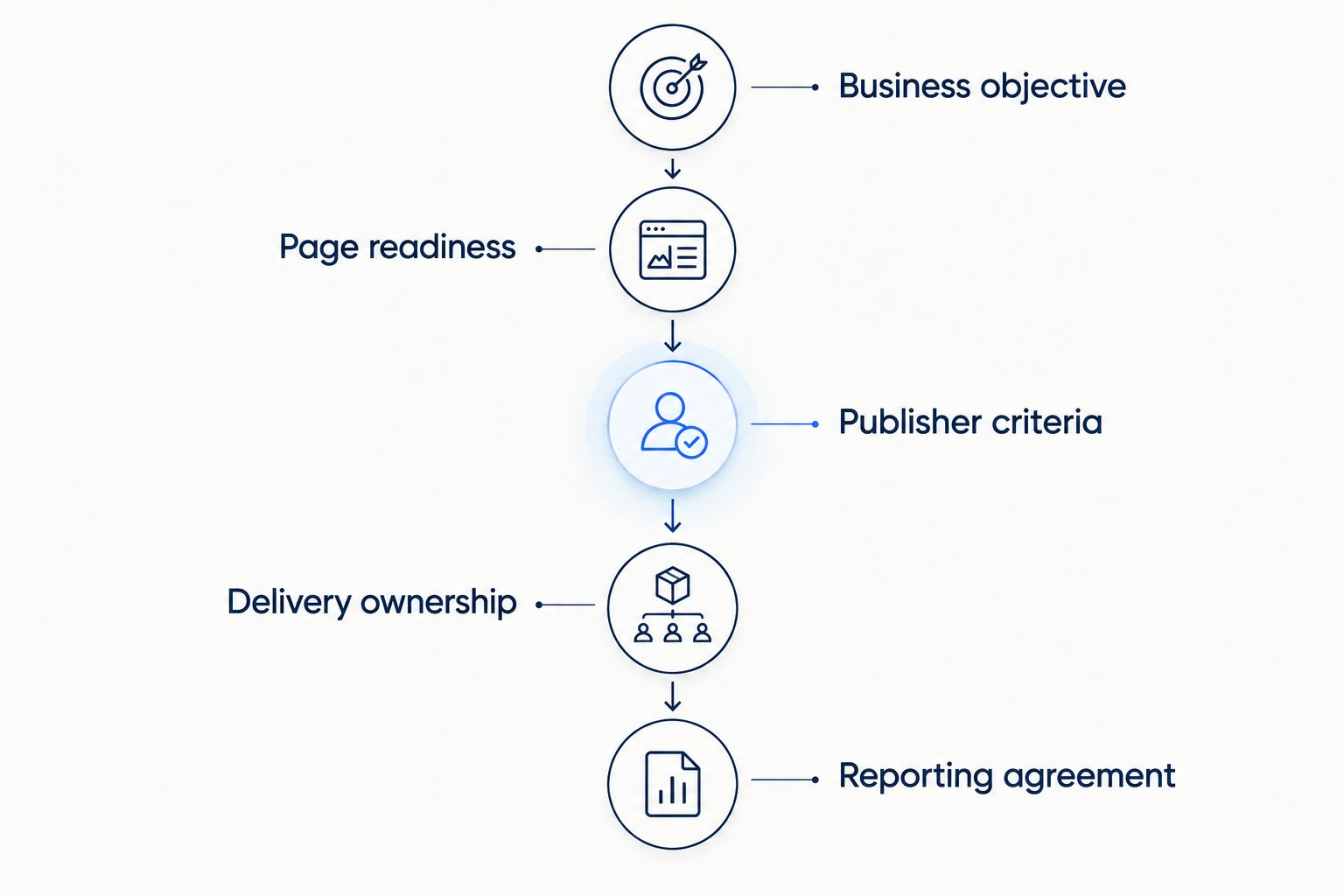
This process gives both agencies the same problem to solve. Differences in the replies then reveal differences in scope, accountability and approach rather than differences in presentation.
Final verdict: choose the missing capability
Choose Linkible if you are the SEO-led SaaS or ecommerce buyer
Your team owns strategy, technical SEO and content, but needs specialist link-building support. You want to evaluate outreach, niche edits and supporting PR against a defined publisher and target-page brief.
The specialist agency is the better fit for that purchase. Confirm the outreach process and reporting expectations before agreeing to delivery.
Choose StudioHawk if you are the marketing lead buying wider SEO ownership
Your business needs help deciding what to fix, publish and promote, not just acquiring references to selected pages. You want a broader SEO proposal with implementation responsibilities attached.
StudioHawk is the better candidate to evaluate for that mandate. Confirm every workstream rather than assuming that a broad engagement includes every SEO task.
| Dimension | Winner |
|---|---|
| Defined link-building brief | Linkible |
| Broader SEO engagement | StudioHawk |
| Stated outreach-service fit | Linkible |
| Unresolved SEO priorities | StudioHawk, subject to agreed scope |
| Publisher relevance | Tie: apply the same acceptance criteria |
| Reporting | Tie: compare proposed deliverables |
| Pricing model | No winner without equivalent scopes |
FAQ
Is Linkible or StudioHawk better for link building?
Linkible is the direct fit for a specialist link-building brief because its stated services include outreach, niche edits, digital PR and HARO link building. Compare publisher criteria and delivery terms before choosing.
Which agency should I consider for broader SEO support?
StudioHawk is the stronger starting point when you are evaluating a broader SEO engagement. Require the proposal to identify the included workstreams and implementation responsibilities.
Which option makes more sense for a SaaS company?
Choose according to the capability your SaaS team lacks. A team with established SEO ownership needs a different engagement from a team that still needs diagnosis and prioritisation.
What should an ecommerce brand check before buying outreach?
Check that the destination pages are ready and the proposed publishers reach a relevant audience. Specify who owns category-page improvements, technical issues and placement approval.
How should I compare agency pricing?
Compare equivalent obligations before comparing charging models. Ask what is included, what counts as accepted work and which responsibilities remain with your team.
Does white-hat positioning guarantee better rankings?
No agency positioning guarantees better rankings. Assess actual outreach methods, editorial relevance, anchor text and the readiness of the pages receiving links.
What should a link-building report contain?
A link-building report should identify the referring URL, destination URL, anchor text, publication date and placement status. Keep delivery records separate from claims about rankings or revenue.
One last thing
Ask each agency which pages it would not promote yet. The answer tests whether the proposed campaign follows your business priorities or simply starts with deliverables.
For your 2026 decision, a useful explanation of why a page needs work first is more actionable than a promise of rankings.
Related guides
- StudioHawk alternatives
- Link-building strategies for SaaS companies
- Link-building strategies for ecommerce stores
Bring your target pages, priority markets and existing SEO responsibilities to contact Linkible. Ask for a link-building scope that defines publisher relevance, outreach methods, deliverables and reporting.